


Build to Thrive caters to professionals and founders seeking clarity, leverage, and income in the new AI economy. It is built for people navigating real transitions and applying what they know to new opportunities as the rules of business change. As a subscriber, you get thoughtful deep dives, timely insights, and practical operating systems you can use to build and adapt in real time. As a paid subscriber, you unlock full access to every article, premium prompts, and our growing library of tools, while joining a community of more than 4,000 founders and aspiring entrepreneurs navigating this path together.
Editorial Note
Hello folks,
I like to start off by inviting you to read our newest edition:
It lays out recurring moments where builders get stuck, look for help, and leave without clear answers. Each week surfaces a small set of real, repeat friction points showing where work or business consistently breaks down, signals that existing tools, advice, or workflows aren’t resolving. It’s not a guide on what to build, but a map of where opportunity may lie.
About this edition:
Not better prompts. Not faster output. Clearer thinking at the moments where work usually breaks: reflection, execution, and judgment.
That’s the role of this week’s Clarity Prompts.
They don’t generate answers. They correct distortion caused by urgency, noise, and narrative bias.
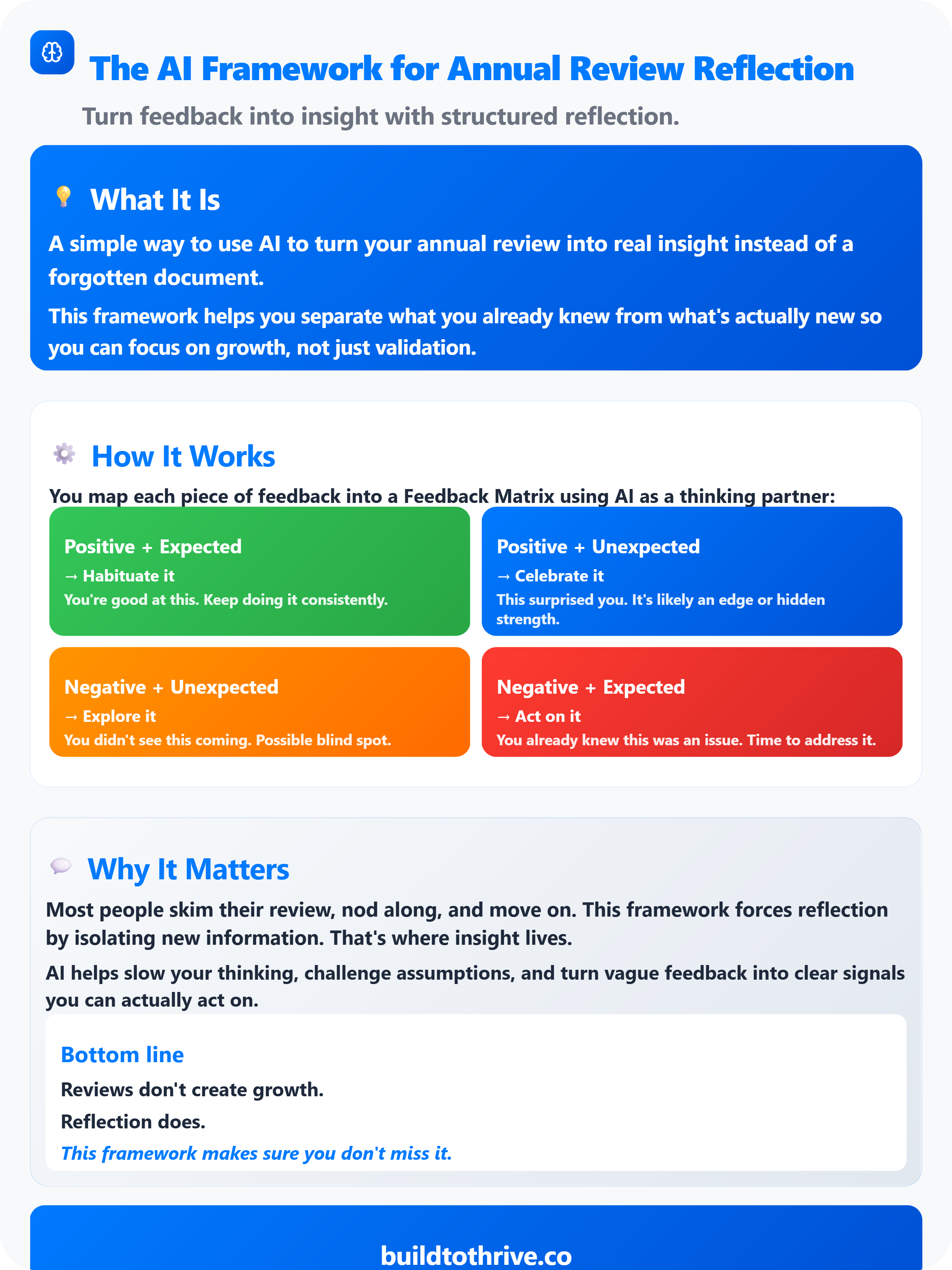
One slows thinking down so feedback produces insight instead of reassurance.
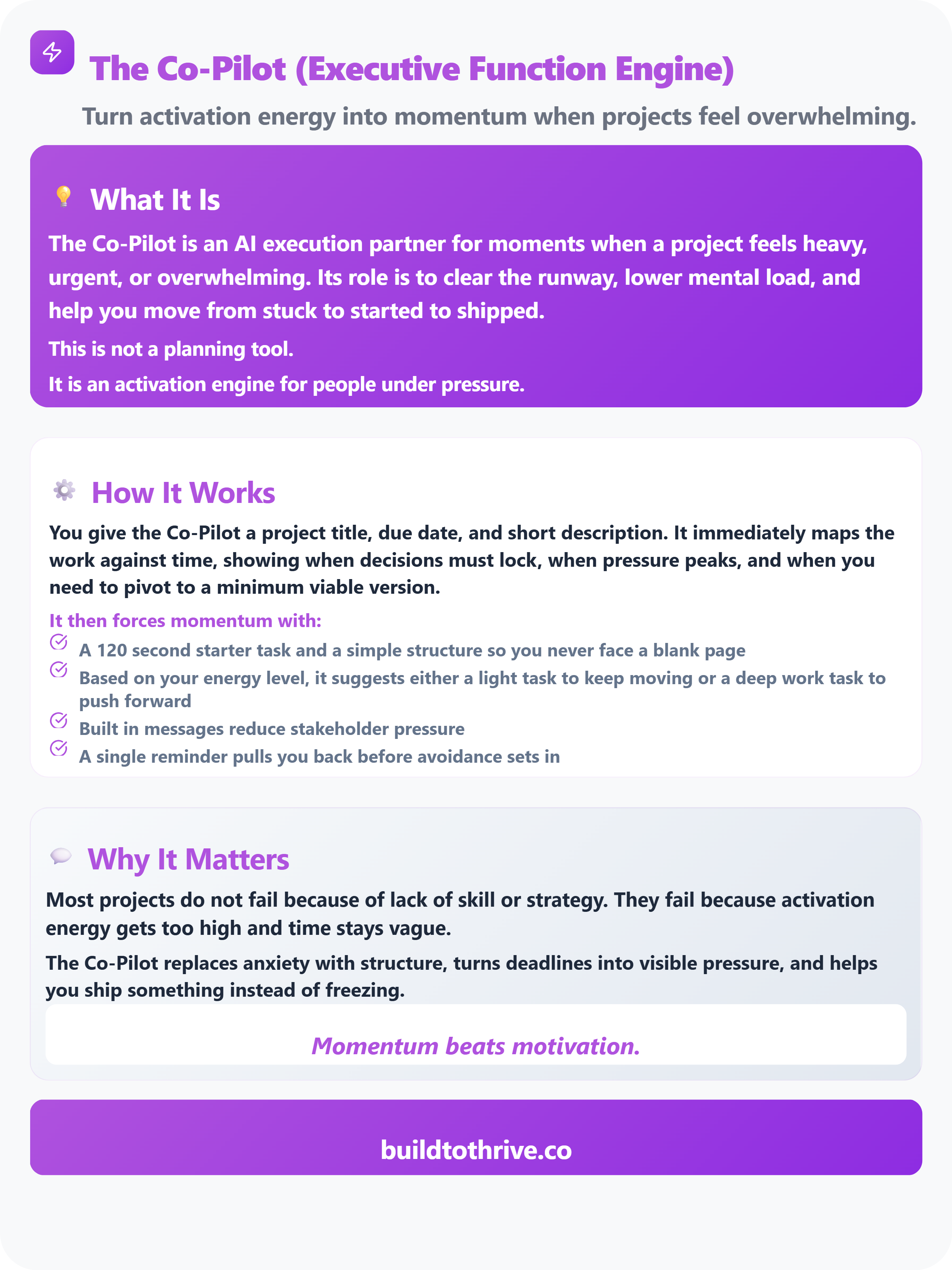
One converts overwhelm into motion by lowering activation energy.
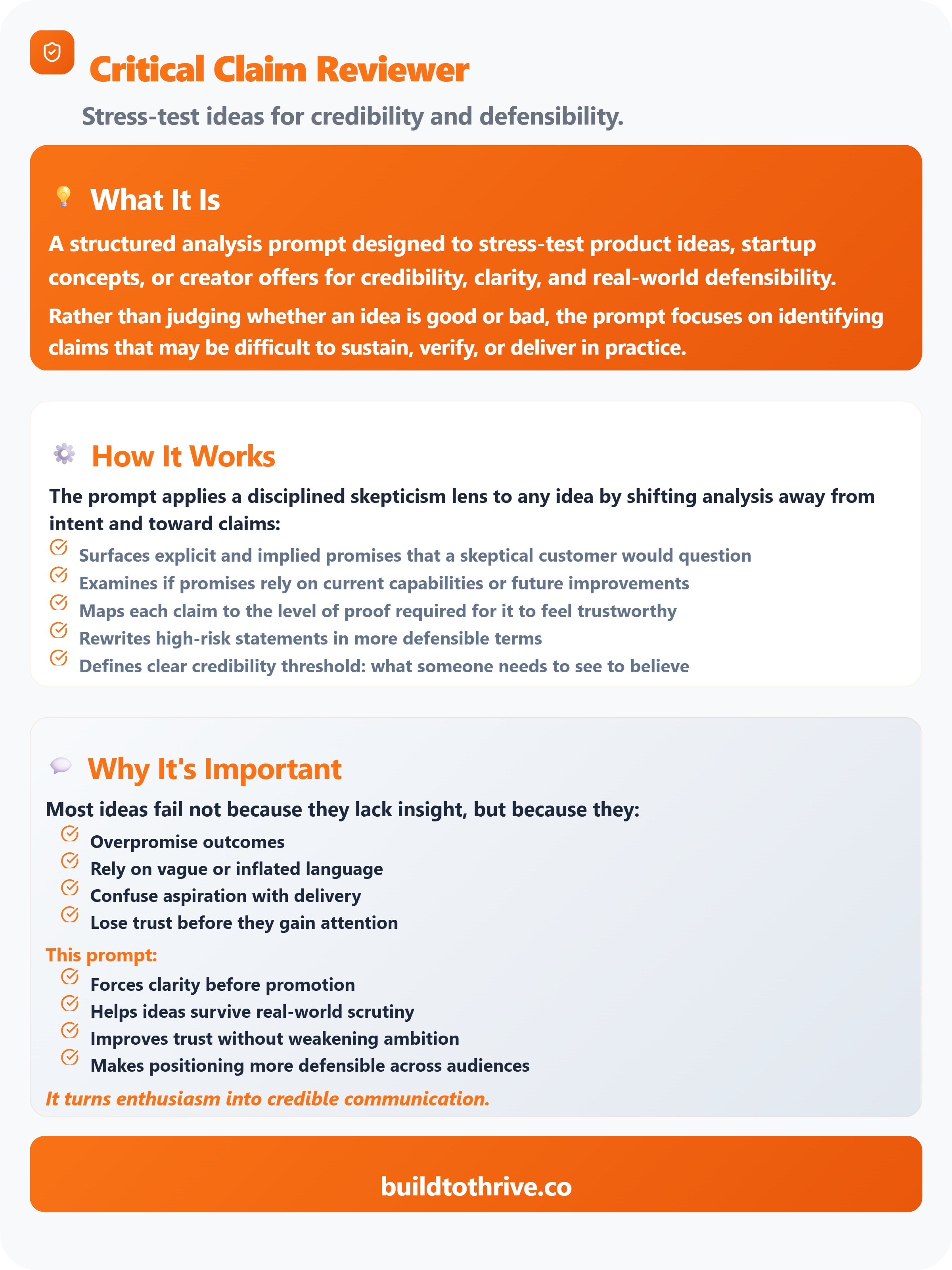
One stress-tests ideas before they meet the real world, separating ambition from defensible claims.
They’re not creative engines. They’re corrective instruments.
That lens carries through the rest of this edition.
In Automation, the story isn’t “smarter AI,” it’s end-to-end work that actually runs. Agents that touch real files. Workflows with approval gates. Systems that scale judgment instead of bypassing it. The leverage comes from delegation with control, not one-off experiments.
In Strategy, the shift is quieter but more consequential. Execution is no longer scarce, decision quality is. When AI closes loops cheaply, advantage collapses to sequencing, standards, and system design. Renting execution now costs more than it saves.
In Capital Markets, the same pattern shows up at scale. Attention is moving from who trains models to who controls inference, orchestration, and governance. The economics are migrating toward usage, control planes, and recurring decision infrastructure, not novelty.
Different altitude. Same goal: clearer decisions in moments that matter.
This is as a map, not a prescription. JS
—🔴—🔴—🔴—
Table of Contents
Clarity Prompts
The AI Framework for Annual Reviews Reflection
The Co-Pilot (Execution Function Engine)
Critical Claim Reviewew
Featured Article: The Weekly Pain Point. Your market signal for ideas worth solving.
AI Automation Leverage
Practical automations that increase output without adding headcount
Strategic Terrain
How AI is reshaping operating models and competitive advantage
AI Capital Market Narratives
The stories shaping risk, margins, and valuation
—🔴—🔴—🔴—
Clarity Prompts
These prompts are designed to bring clarity at three critical moments of work: reflection, execution, and judgment.
One slows thinking down to extract real insight from feedback and experience.
One converts pressure and overwhelm into concrete forward motion.
One stress-tests ideas before they meet the real world.
Together, they act as cognitive instruments — not to generate answers, but to correct distortion caused by noise, urgency, and narrative bias. They help separate signal from reassurance, momentum from motivation, and ambition from defensible claims.
—🔴
The AI Framework for Annual Review Reflection
The Human Stack focuses on how humans and technology evolve together in the age of AI. It avoids hype and fear and instead offers grounded perspectives on skills, decision making, and adaptation in real organizational and career contexts. In a world where technology is reshaping work, leadership, and careers at an accelerating pace, The Human Stack is one of the most thoughtful newsletters exploring what this shift actually means for people.
If you are thinking seriously about the future of work, human centered AI adoption, and where to invest your time and energy as change accelerates, this is a perspective worth following.
—🔴
The Co-Pilot (Executive Function Engine)
By Adam Pryor
Purposeful AI is a thoughtful, grounded take on one of the noisiest topics in higher education and the non-profit world: generative AI.
Written by Adam Pryor, a former provost and longtime higher-ed leader, this newsletter cuts through the hype and anxiety to focus on what actually matters—how mission-driven organizations can use AI responsibly, strategically, and with real impact.
Adam doesn’t treat AI as a shiny tool or a looming threat. He frames it as a partner—one that can augment human judgment, creativity, and ethics when applied with intention. Inside Purposeful AI, you’ll find practical frameworks, real-world blueprints, and human-centered perspectives designed for leaders who want clarity, not jargon.
—🔴
CRITICAL CLAIM REVIEWER
What Just Happened in AI is a sharp, founder-first newsletter by Laura Ferraz Baick that breaks down what’s actually happening in AI and what it means for how you build, grow, and lead. It blends the most important weekly AI updates with real-world lessons from marketing, growth, and strategy—experiments that worked, mistakes that didn’t, and clear thinking beyond the hype. With a strong point of view on independence, liberty, and conscious leadership, this is a smart read for founders, operators, and creators who want to use AI as leverage without outsourcing their judgment or vision.
If you want to stay ahead of AI without chasing every headline, sharpen your strategic thinking instead of handing it over to tools, and learn how real founders are actually using AI to grow with intention, you should follow What Just Happened in AI.
—🔴—🔴—🔴—
Featured Article:
New Edition of Build to Thrive.
The Weekly Pain Point - by Juan Salas-Romer

—🔴—🔴—🔴—
AI Automation Leverage - Grow Margins
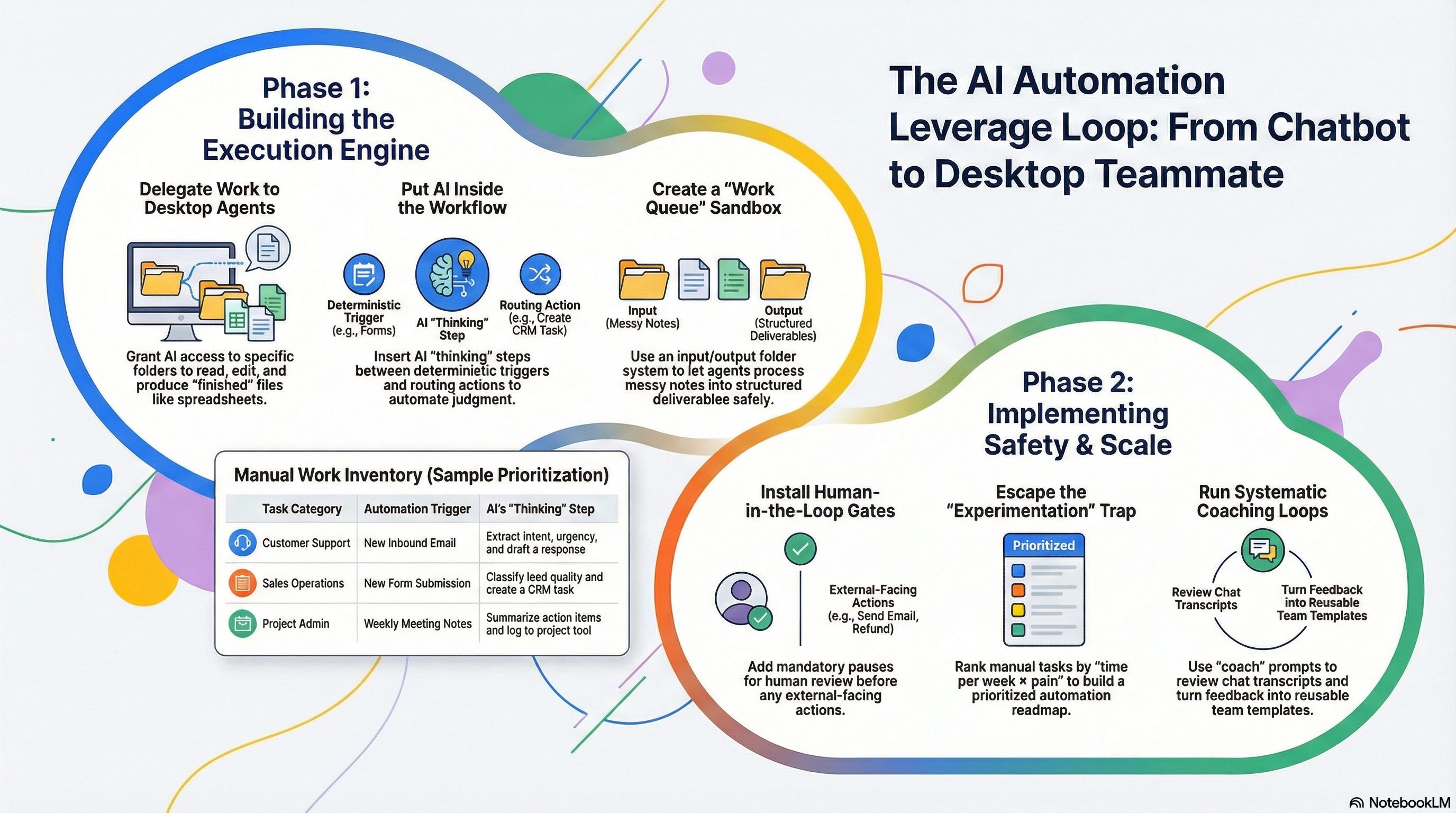
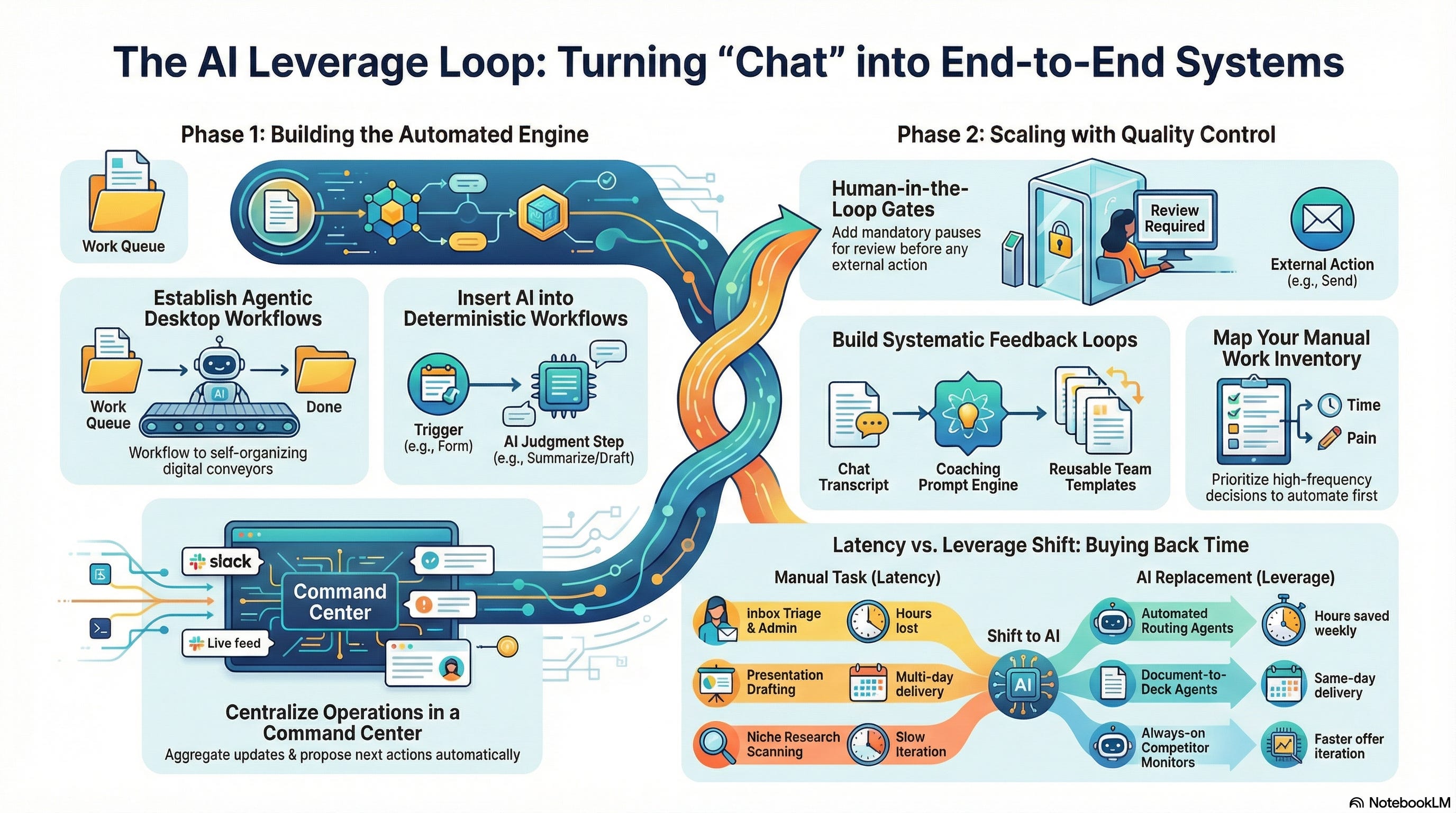
This week is about turning AI from a chat window into work that runs end-to-end: desktop agents that can touch real files, no-code workflows that include AI steps, and safer execution via human approval gates. The pattern is clear: delegate bigger chunks, standardize how work enters the system, and add lightweight control loops so automation scales without surprises.
Cowork brings agentic execution to Claude Desktop: it can read and write local files you permit, run longer multi-step tasks, coordinate sub-tasks in parallel, and produce “finished” deliverables like spreadsheets and decks, with safety prompts for destructive actions. (Claude Help Center)
Practical Takeaway: one specific action a low tech founder can execute this week using AI, Create a “Work Queue” folder (inputs) and “Done” folder (outputs). Drop messy notes, PDFs, screenshots, and CSVs into Work Queue and ask Cowork for one concrete deliverable (invoice log, client brief, outreach list) saved into Done. Put AI inside your automation, not beside it.
How to build an AI-powered automated workflowZapier’s playbook is simple: keep your trigger and routing deterministic, then insert an AI step where judgment is needed (summarize, classify, draft, extract). You get repeatable automation with flexible “thinking” in the middle. (Zapier)
Practical Takeaway: one specific action a low tech founder can execute this week using AI
Build one “Inbox to Actions” workflow: new form submission or email → AI extracts intent + urgency + next step → create a task in your PM tool and a draft reply for you to send.Trend Title (short, punchy, AI-specific)
Approval gates for agent workflowsLinked Article Title as a hyperlink only (no raw URLs)
Human in the Loop: Pause Zaps for human review and approvalSummary (50 words or fewer)
Human in the Loop adds built-in pauses to workflows so a person can approve, edit, or add missing data before automation continues. It supports approvals or data collection, with notifications via email or Slack and an audit trail of decisions. (Zapier)Practical Takeaway: one specific action a low tech founder can execute this week using AI
Add an approval step before any external-facing action: sending an email, posting social, invoicing, or refunding. Route the approval to your email so you can approve or tweak in under 30 seconds.Trend Title (short, punchy, AI-specific)
Escape the “random AI experiments” trapLinked Article Title as a hyperlink only (no raw URLs)
70% of companies are stuck at AI experimentation: Get a tailored AI automation strategy with Make AI PlaybookSummary (50 words or fewer)
Make is pushing a structured approach: a quick maturity assessment that outputs a prioritized roadmap, concrete next steps, and guidance on where to use agents versus traditional automation. The goal is fewer disconnected pilots and faster compounding ROI. (Make)Practical Takeaway: one specific action a low tech founder can execute this week using AI
Write a 10-item “manual work inventory” (sales, support, ops). Rank by (time/week × pain). Automate the top 1 with a roadmap: trigger, data source, AI step, approval gate, and where outputs live.Trend Title (short, punchy, AI-specific)
Prompt feedback loops beat better promptsLinked Article Title as a hyperlink only (no raw URLs)
Meet Your AI Prompting CoachSummary (50 words or fewer)
Instead of guessing why a prompt worked, this proposes a “coach” prompt that reviews a full AI chat transcript and returns structured feedback on what you did well, what you missed, and what to practice next. Skill compounds when feedback is systematic. (Leegonzales)Practical Takeaway: one specific action a low tech founder can execute this week using AI
Save 3 real transcripts (sales email draft, customer reply, spec doc). Run each through a coaching prompt, then turn the feedback into a reusable “prompt template” your team uses every time.
Why It Matters (3–5 sentences)
Small teams win when they turn AI into repeatable systems, not one-off answers. The leverage jump this week is agents that can act on real work artifacts (files, folders, workflows) paired with lightweight controls (approval gates and coaching loops) so quality improves over time. The compounding advantage comes from building a tiny automation portfolio that runs daily and gets sharper weekly. (Claude Help Center)
Founder Reflection
What’s one “high-frequency decision” you keep making manually that could become an automated classification step plus a 30-second approval?
If a task touches files, repeats weekly, and still requires you to think the same thoughts every time, it’s probably a workflow, not a conversation.
—🔴—🔴—🔴—
Strategic Terrain - Design Smarter
Signals: Work You No Longer Need to Buy
Inbox sorting + calendar coordination
Previously handled by: VA / admin support
What changes: Rules-based AI now triages messages, flags priorities, and schedules without supervision
Why it matters: If you’re paying any retainer here, this is often the easiest “cancel and replace.” Once templates are set, it buys back multiple hours every week. (Entrepreneur)
Turning a document into a clean pitch or sales deck
Previously handled by: Designer or presentation freelancer
What changes: AI can format, structure, and iterate decks same-day
Why it matters: Every deck becomes an immediate artifact instead of a paid handoff and revision cycle. Faster shipping, fewer meetings. (Entrepreneur)
“What’s working in my niche” scanning + competitor teardown
Previously handled by: Research assistant or marketing contractor
What changes: Always-on AI research scans trends, offers, and messaging continuously
Why it matters: Fewer paid hours and faster offer iteration when research is ambient, not episodic. (Entrepreneur)
First-draft copy that “sounds fine” but isn’t yours
Previously handled by: Copywriter (for drafts)
What changes: AI handles volume; you run the critique loop
Why it matters: You stop paying humans to fix AI workslop and keep voice quality under your control. (Harvard Business Review)
Customer support that requires empathy (use selectively)
Previously handled by: Outsourced live answering for routine questions
What changes: AI handles first response and routing; humans step in where trust matters
Why it matters: You cut costs without eroding trust — and protect the moments that actually drive retention and sales. (Entrepreneur)
Why It Matters
At solo scale, “AI competence” is now assumed. Your market doesn’t care that you’re one person, only that you respond and ship. The trap is low-effort automation: if you create believable-but-empty output, you waste time and damage trust; owning the workflow means you control quality. Renting execution is structurally inferior when the bottleneck is no longer labor supply—it’s your decisions and your standards. (Harvard Business Review)
How It Affects Solopreneurs
Your leverage expanded most where you used to pay for “conversion glue”: research, drafts, formatting, repurposing, and basic ops coordination. Quality compounds faster solo when you build a tight loop—AI generates, you evaluate, AI revises—so each week you get both speed and a sharper voice. Continuing to outsource the basics now costs margin and cycle-time: you’re buying delay, meetings, and revisions instead of output. (Entrepreneur)
E) Top Articles of the Week
7 AI Tools That Run a One-Person Business in 2026 — No Staff. No Code.
Source: EntrepreneurWhy People Create AI “Workslop”—and How to Stop It
Source: Harvard Business ReviewSurvey: How Executives Are Thinking About AI in 2026
Source: Harvard Business ReviewWhy AI Boosts Creativity for Some Employees but Not Others
Source: Harvard Business ReviewAI in Customer Service Is Eroding Trust — Here’s What You Need to Know Before It Derails Your Business
Source: Entrepreneur
Pause and Reflect
This week, choose one thing you’re still paying for because it feels safer and decide whether you’re actually buying quality or just buying delay.
—🔴—🔴—🔴—
AI Capital Market Narratives - Move Early
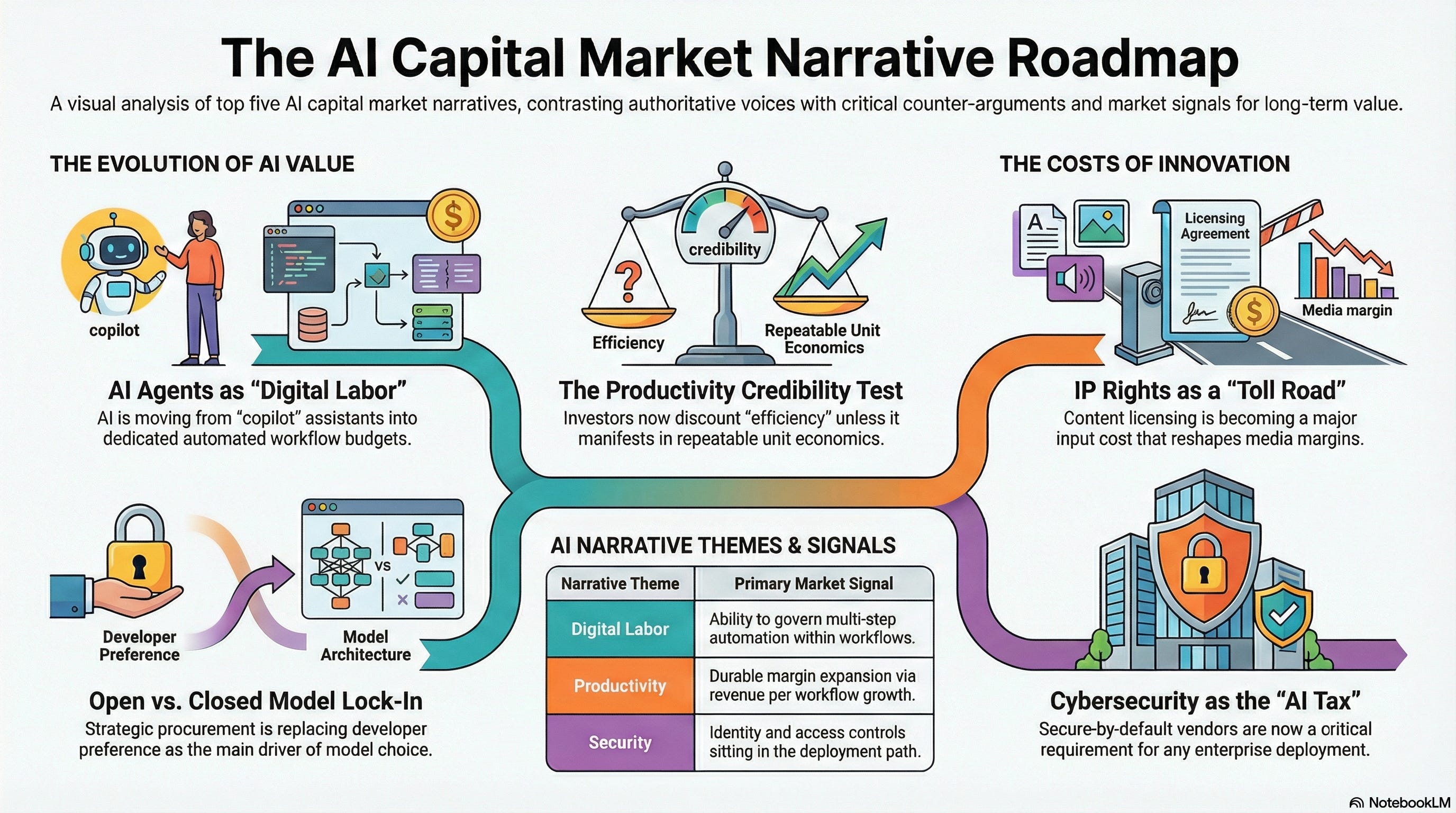
This section zooms out, but it feeds back down. These narratives are quietly shaping which tools, platforms, and dependencies builders will be locked into for years.
Inference Becomes the Main Event
What authoritative voices are saying. Investor attention is shifting from “who trains the biggest model” to “who runs inference cheaply and fast at scale,” reshaping what parts of the stack matter most. (The Wall Street Journal)
What critics are arguing. Inference can compress pricing quickly, so “volume wins” may not translate into durable margins for everyone.
Signal: Watch where workloads migrate (cloud, edge, on-prem) and who captures the recurring economics of usage.
Agentic AI Moves Into Core Workflows
What authoritative voices are saying. AI “agents” are being embedded into enterprise systems (IT ops, service desks, back office), framed as a workflow shift—not a chat feature. (The Wall Street Journal)
What critics are arguing. “Agent” is becoming a loose label; real autonomy is brittle, and rollout risk shows up in implementation drag.
Signal: Track platform vendors that can standardize deployment across many customers, not one-off pilots.
Cybersecurity Rebuilds Around Machine Users
What authoritative voices are saying. Security leaders are leaning on AI to triage alerts, map vulnerabilities, and manage identity checks as machine activity scales. (The Wall Street Journal)
What critics are arguing. Attackers get the same tools; automated defense can create automated failure modes without tight controls.
Signal: Look for spend shifting toward identity, authorization, and continuous monitoring built for non-human actors.
AI Becomes a Credit-Market Story
What authoritative voices are saying. Funding the buildout is increasingly discussed in terms of bond supply, spreads, and the credit ecosystem’s capacity to absorb issuance. (Bloomberg)
What critics are arguing. More leverage and longer-dated commitments raise sensitivity to rate moves and execution hiccups.
Signal: Treat AI exposure as both equity upside and balance-sheet duration.
Orchestration and Governance as the “Hidden Stack”
What authoritative voices are saying. Multi-agent environments are driving demand for orchestration—managing, observing, and controlling many agents across tools and teams. (deloitte.wsj.com)
What critics are arguing. Orchestration layers can become a new complexity tax that slows delivery.
Signal: The winners may be the ones selling control planes, not just capability.
YOU KNOW MORE THAN YOU ADMIT
YOU HAVE MORE THAN YOU GIVE YOURSELF CREDIT FOR
THE ONLY THING MISSING IS A SYSTEM THAT LETS YOUR EXPERIENCE COMPOUND
BUILD IT AND YOUR GROWTH BECOME INEVITABLE
YOUR NEXT CHAPTER IS WAITING
Some reader favorites
Build to Thrive | The Blueprint | Week of January 12, 2026
How I Reclaimed My Attention by Making One Decision Stick
AI Is Here. Let’s Get Your Business in the Game.
How I Scaled My Business Without Hiring: Building My First AI Agents for $0
The Science of Execution: Why Most Founders Stay Stuck (and How to Break Through in 90 Days)
How to Build Assets That Compound (Even When Life Forces You to Pivot)
Everyone’s Rushing to AI. Few See the Ceiling Ahead.
Scaling Smart: 5 Systems Every Solopreneur Needs to Grow Without Burning Out
Built to Blaze: How Ooni Turned Backyard Pizza into a $200M Global Movement
Thanks for the great work you’re doing to educate people about AI, Juan.
I’m really happy to be featured in such a helpful publication ☺️
I love it. Super useful for me. I am using the Critical Claim Review right now.