


Build to Thrive caters to professionals stepping into entrepreneurship and founders who need clarity, operating leverage, and practical paths to monetize in the AI-driven economy. As a subscriber you get deep dives, timely insights, and operating systems that shape tomorrow’s business. As a paid subscriber you unlock all articles, gain access to our library of tools and become part of our active community of more than 4000 aspiring entrepreneurs and founders.
Editorial Note
Hello folks,
Quick note before we dive in.
Over the past few weeks, I’ve been paying attention to a shift that’s easy to overlook when you’re busy running things. Nothing dramatic on the surface. No single tool or announcement. Just a steady compression in how fast decisions turn into outcomes.
This edition maps how AI is compressing the fundamentals beneath how companies build, decide, and compete. Not by introducing new capabilities, but by collapsing the structures that once made those capabilities scarce.
Across the sections that follow, the shared signal is compression. Decision cycles are shortening. Team size is shrinking. Cost structures are flattening. The constraint is no longer access to tools, talent, or execution capacity. It is judgment about where to apply them.
You’ll see this from multiple angles. Strategic signals showing why coordination layers and default hiring are becoming liabilities. Automation examples that illustrate how small teams can now ship, test, and iterate faster than larger organizations. Market narratives that explain why public stories swing between bubble fear and dominance, even as real advantages concentrate unevenly.
This shift doesn’t just change how businesses operate. It changes what’s demanded of the individual operator. When execution becomes abundant, the unit of competition collapses to the decision-maker. Business strategy and personal judgment merge.
This edition is not about chasing tools or working harder. It’s about recognizing where leverage moved, which assumptions are now outdated, and how misallocation has become the primary risk in an AI-saturated environment.
Use it as a map, not a manifesto. JS
Table of Contents
Clarity Prompts
Positioning Focus Prompt
The 5D Content Audit
ChatGPT Wrapped
Featured Article: Why Professionals Struggle to Monetize their Talent.
AI Automation Leverage
Practical automations that increase output without adding headcount
Strategic Terrain
How AI is reshaping operating models and competitive advantage
AI Capital Market Narratives
The stories shaping risk, margins, and valuation
CLARITY PROMPTS
This week’s Clarity Prompts focus on three places where AI often creates confusion instead of clarity: ethics, judgment, and confidence.
The first prompt helps you make sense of AI’s real-world impact. It translates fast-moving AI developments into clear, grounded thinking so you can understand what’s changing, what’s at stake, and where risks show up first for everyday users.
The second sharpens professional judgment. It moves you beyond tool-chasing and surface productivity gains to focus on how AI actually improves thinking, decision-making, and creative quality.
The third builds confidence and voice. It helps you experiment with AI in a way that supports your perspective rather than replacing it, turning prompts into tools for expression, not imitation.
Together, these prompts help you see more clearly, think more deliberately, and use AI with intention rather than noise.
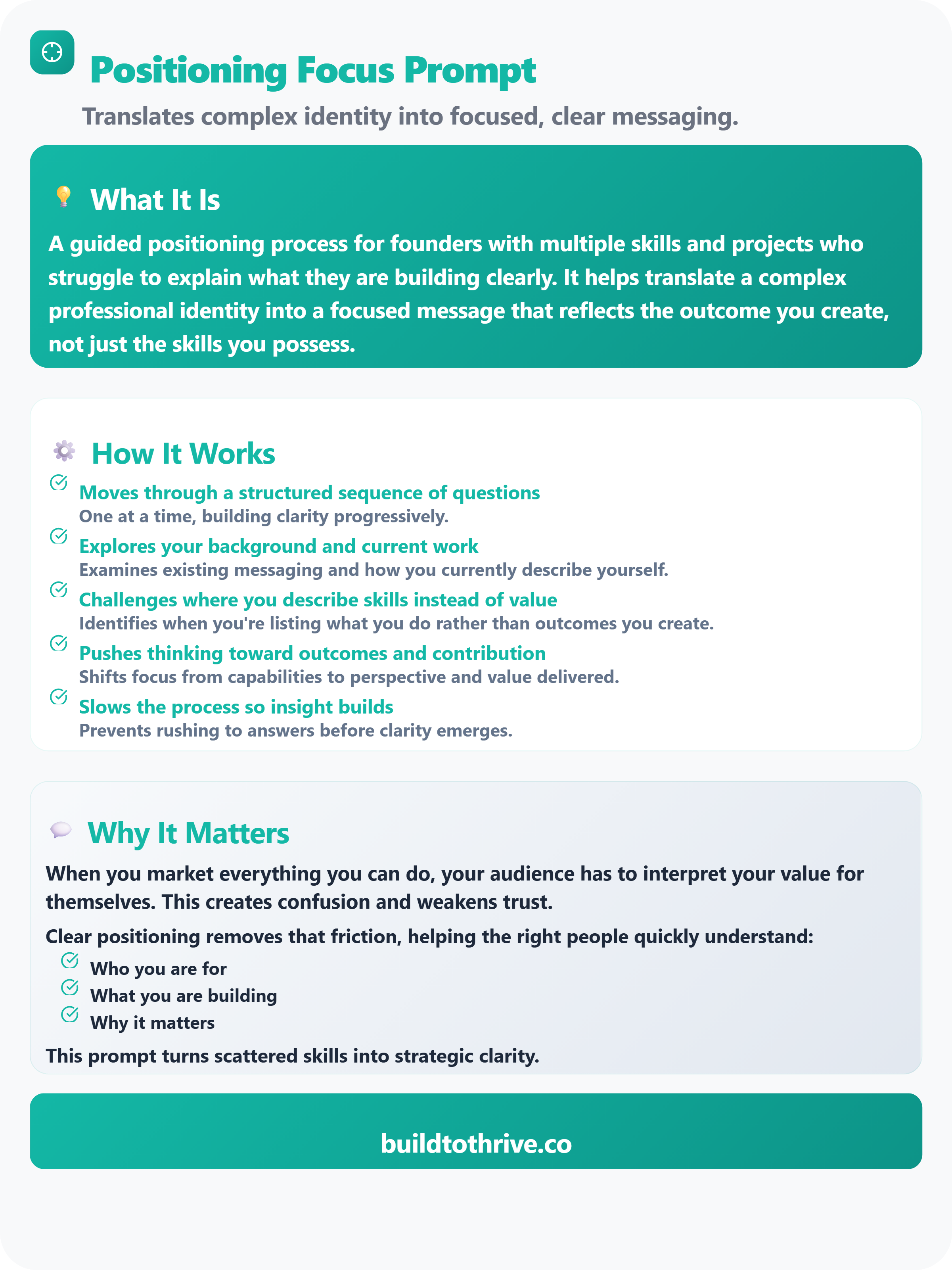
Positioning Focus Prompt
By Courtney Hart
A Few Thousand Days | AI Ethics and Experiments is a newsletter about AI ethics and real-world impacts, focused on how rapid AI adoption is affecting kids, families, and everyday tech users who are trying to make sense of what’s changing — and what’s at stake.
It translates complex AI developments into clear, non-hype analysis: how platforms, policies, and product decisions reshape daily life, what tradeoffs are being made, and where real risks show up first. A central lens is children and teens — safety, surveillance, education, deepfakes, parental controls, and the unintended consequences of “move fast” AI deployment.
Written for non-technical but deeply concerned readers — especially parents, caregivers, and educators — A Few Thousand Days combines hands-on experimentation with ethical analysis to explain what’s happening, why it matters, and how to respond with context rather than panic or blind optimism.
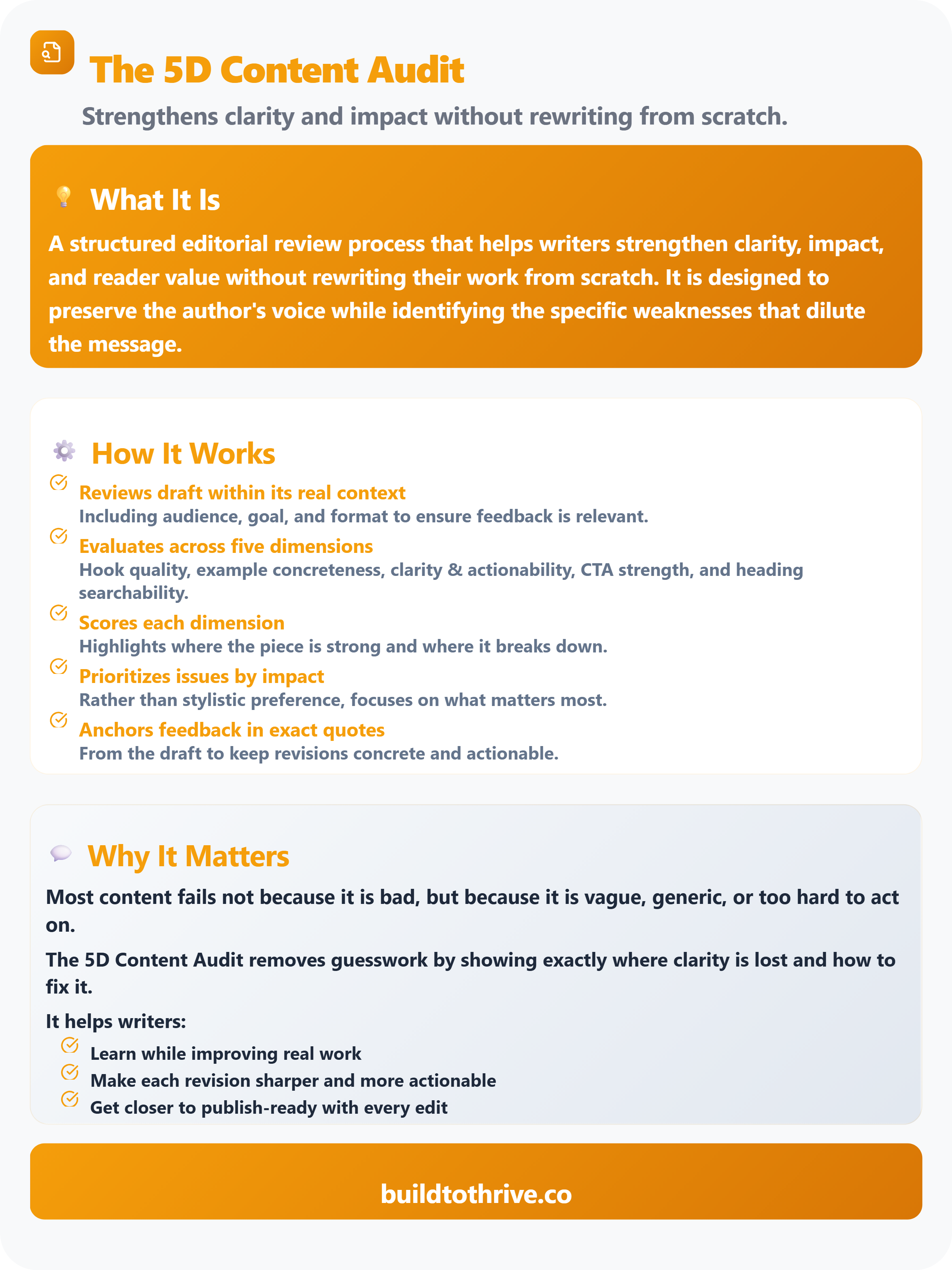
The 5D Content Audit
By Ilia Karelin
PROSPER is a newsletter for professionals who want to work smarter with AI, not just faster.
Instead of chasing every new model or collecting prompts that never compound, Prosper focuses on practical AI systems, workflows, and frameworks that improve how you think, decide, and create. The emphasis is on quality of thinking over raw productivity.
If you want AI to sharpen your thinking, not erode it, Prosper is for you.
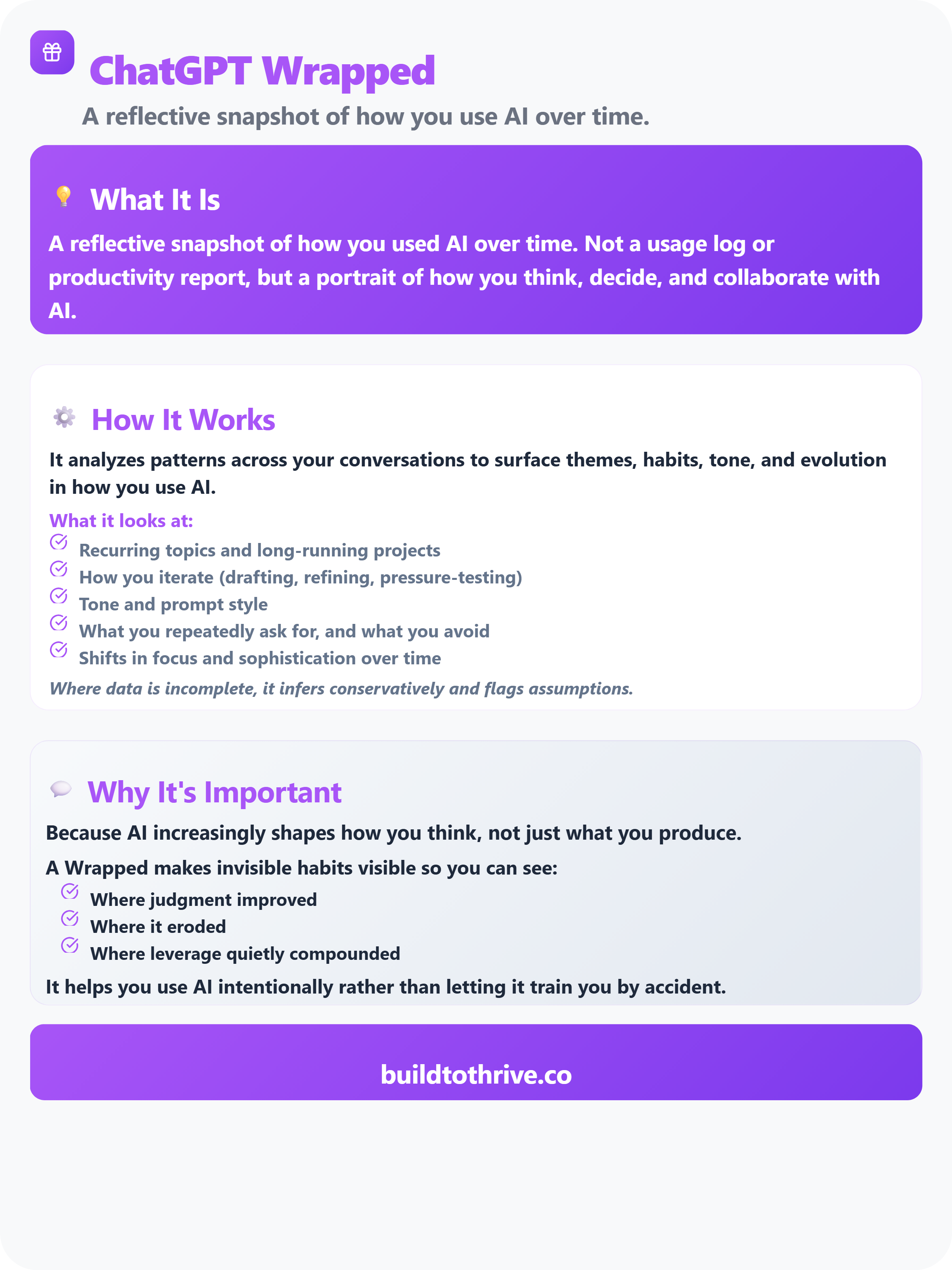
CHATGPT WRAPPED
By Szilvia
AI Meets Girlboss is a newsletter for ambitious women who want to use AI confidently without turning it into something technical, intimidating, or boring.
It shares the practical knowledge most AI content skips: real prompt experiments, clear framing, pop-culture-grounded explanations, and workflows that help you think with AI instead of sounding like it. Everything is focused on building confidence, not chasing tools or pretending to be an expert.
If you’re curious about how AI changes thinking, creativity, and personal brand and want to use it in a way that supports your voice rather than replacing it, AI Meets Girlboss is designed for you.
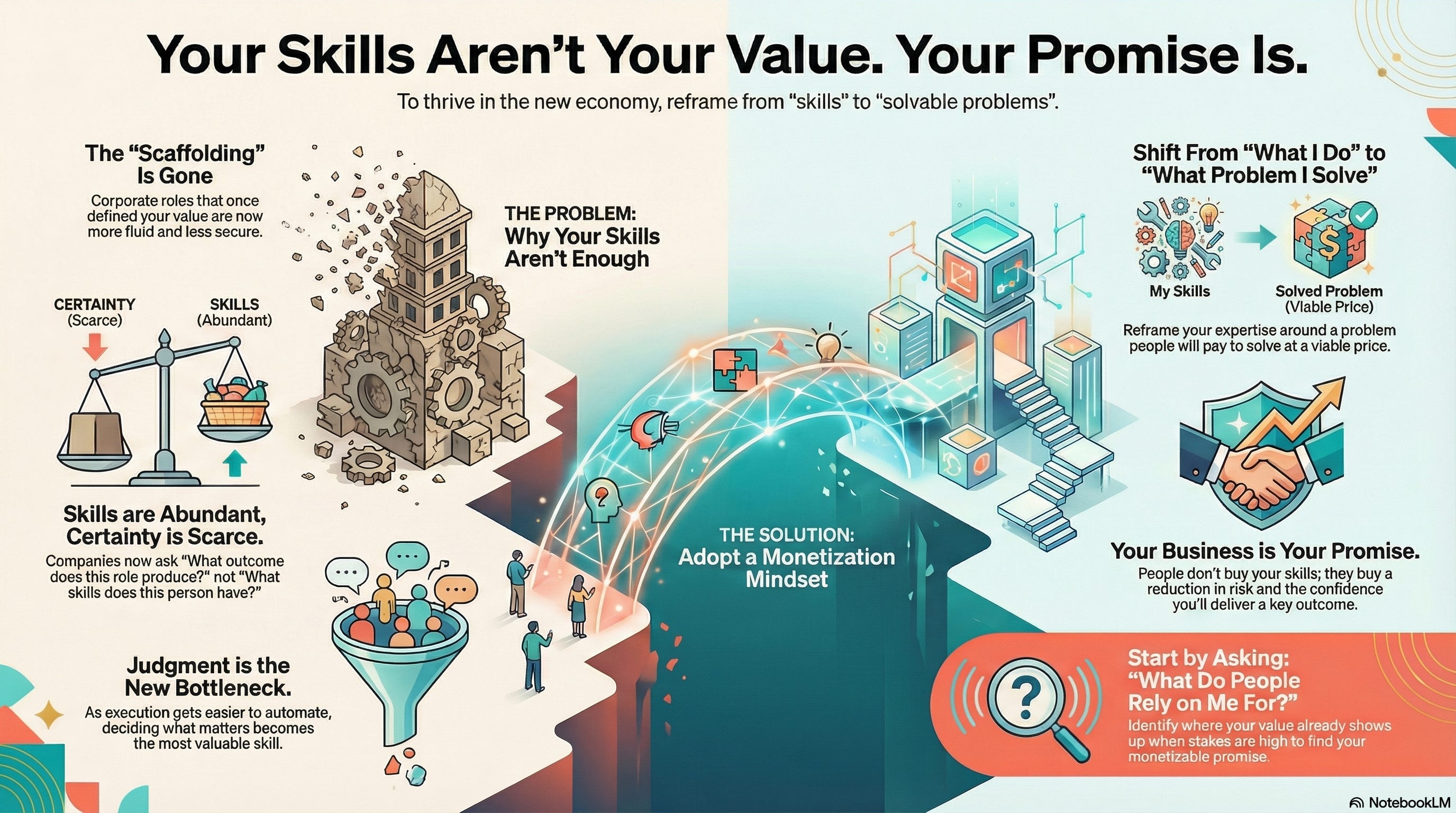
Featured Article: Why Professionals Struggle to Monetize their Talent. By Juan Salas-Romer
AI Automation Leverage - Grow Margins
A weekly snapshot of practical AI automations founders can deploy immediately to increase output without adding headcount
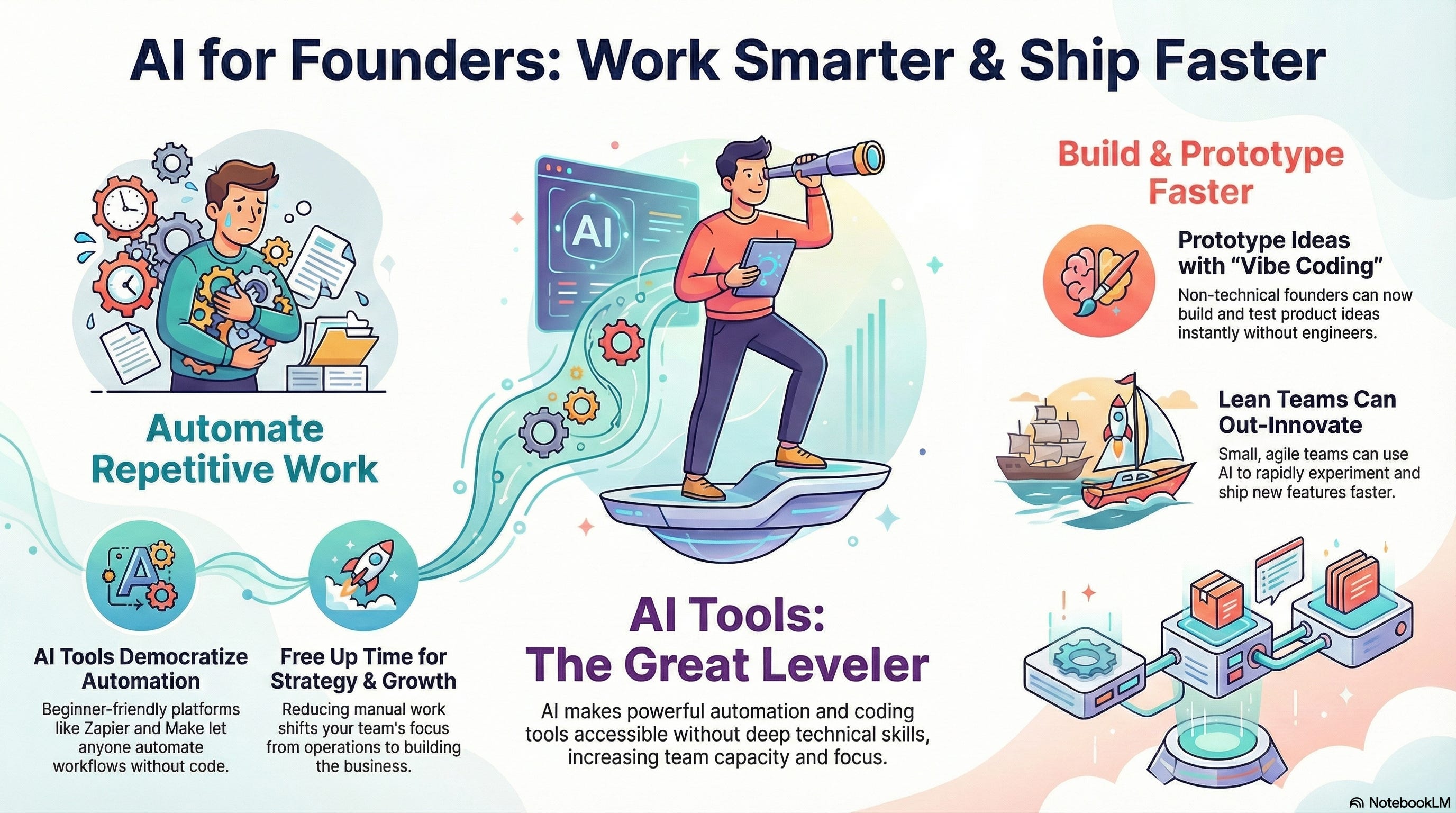
This week’s trends show AI is democratizing automation for small teams by lowering technical barriers, speeding up coding and prototyping, and offering beginner-friendly workflow tools you can adopt now. Founders can use these developments to automate repetitive work, ship products faster, and build with less technical overhead, translating AI advances directly into workflow leverage.
AI Tools for Beginner Automation
Best AI Tools to Learn Automation as a Beginner
Summary
Guide highlights AI-powered platforms like Zapier, Make, and ChatGPT that help beginners build automation without coding by guiding them step-by-step through workflows. (eWeek)
Practical Takeaway
Start using Zapier or Make this week to create one automation that saves you daily time—like auto-logging new leads into a spreadsheet.
Vibe Coding for Non-Tech Founders
Replit Boss Says CEOs Can Build Prototypes with AI
Summary
Replit’s CEO says “vibe coding” tools empower founders to prototype product ideas without needing engineers, enabling faster decision-making and reducing reliance on traditional development cycles. (Business Insider)
Practical Takeaway
Pick a vibe coding platform and build a simple prototype of your core product idea to validate with potential users this week.
Lean Teams Lead in AI Innovation
Cursor’s AI Features Emerged from Small Teams
Summary
Cursor’s engineering head notes major product innovations came from lightweight, rapid experiments within a small team, illustrating how tiny teams can iterate faster using AI tools. (Business Insider)
Practical Takeaway
Adopt an internal practice where team members spend 1–2 hours weekly prototyping AI ideas to solve friction points.
Top AI Startups Signal Automation Focus
10 AI Startup Companies to Watch in 2026
Summary
Emerging AI startups are driving innovation in agents, orchestration, coding assistants, and workflow automation, signaling where practical tools for small teams are likely to appear next. (CRN)
Practical Takeaway
Monitor and test new startups’ tools that align with your automation goals, especially those offering no-code workflows or agent builders.
AI Productivity and Workflow Tools Growing Fast
AI Workflow Automation Tools Surge in 2026
Summary
Recent guides suggest a growing suite of AI workflow automation platforms (Zapier, Make, n8n, etc.) that connect systems and automate repetitive tasks across business functions. (The Digital Project Manager)
Practical Takeaway
Choose one AI workflow tool and automate a process like reporting, onboarding, or task routing this week.
What Matters
This week’s trends reinforce AI’s role as a multiplier for small teams by making automation accessible without deep technical expertise. Reducing manual work frees time for strategy and growth, not just operational maintenance. With vibe coding and no-code workflow tools, founders can prototype and automate faster than ever before, effectively increasing capacity without hiring. Early adopters of these tools can compound advantage by establishing efficient processes that scale with minimal overhead. The tools emerging now are practical entry points for any founder looking to work smarter and ship faster.
Founder Reflection
What is one repetitive task in your current workflow that, if fully automated with AI this week, would free up the most time for strategic work?
Strategic Terrain - Decide Smarter
A weekly map of how AI shifts the ground beneath how companies build and compete.
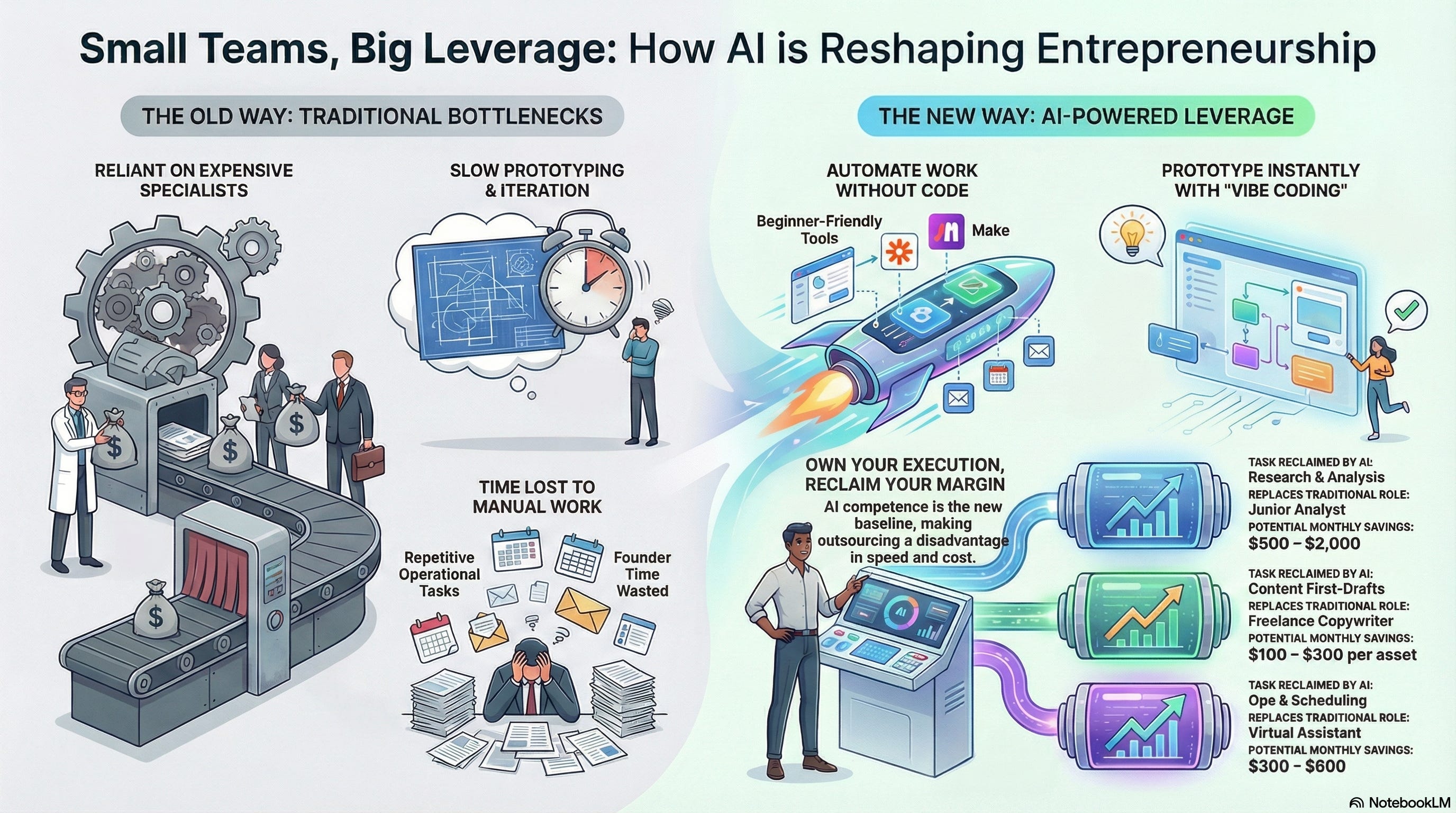
This week, AI shifted competitive advantage away from scale and toward speed of iteration. Companies are still overpaying for organizational complexity where AI now collapses coordination into direct execution. Delay now doesn’t just cost efficiency. It concedes terrain to faster builders.
Strategic Signals
Coordination layers are becoming a liability
What’s unnecessary: project managers and handoffs
Competitive shift: speed now beats org depth
Result: faster launches without headcount dragStrategy docs without execution loops are obsolete
What’s unnecessary: static planning cycles
Competitive shift: real-time testing replaces planning
Result: weaker competitors lock into bad decisions longerCustom software moats are thinning
What’s unnecessary: long bespoke builds
Competitive shift: adaptability over proprietary systems
Result: smaller players match features fasterContent volume is no longer a differentiator
What’s unnecessary: high-output content teams
Competitive shift: relevance and timing win
Result: incumbents lose attention advantageHiring as default growth strategy is weakening
What’s unnecessary: early headcount expansion
Competitive shift: tools compound faster than people
Result: lean operators outmaneuver larger firms
What Matters
AI competence is now a baseline assumption in competition, not a bonus. Execution standards rose because iteration speed defines who learns fastest. Owning execution beats renting labor because adaptability now determines survival.
How It Affects Solopreneurs and Small Team Businesses
The gap between small and large narrowed where speed matters most. One operator can now test, ship, and adjust before larger competitors align internally. Continuing to scale through people slows learning and increases strategic rigidity.
AI Capital Market Narratives - Move Early
A concise snapshot of the AI narratives currently shaping how markets, media, and institutional investors are reframing risk, margins, and valuation
Top 5 AI Narratives of the Week
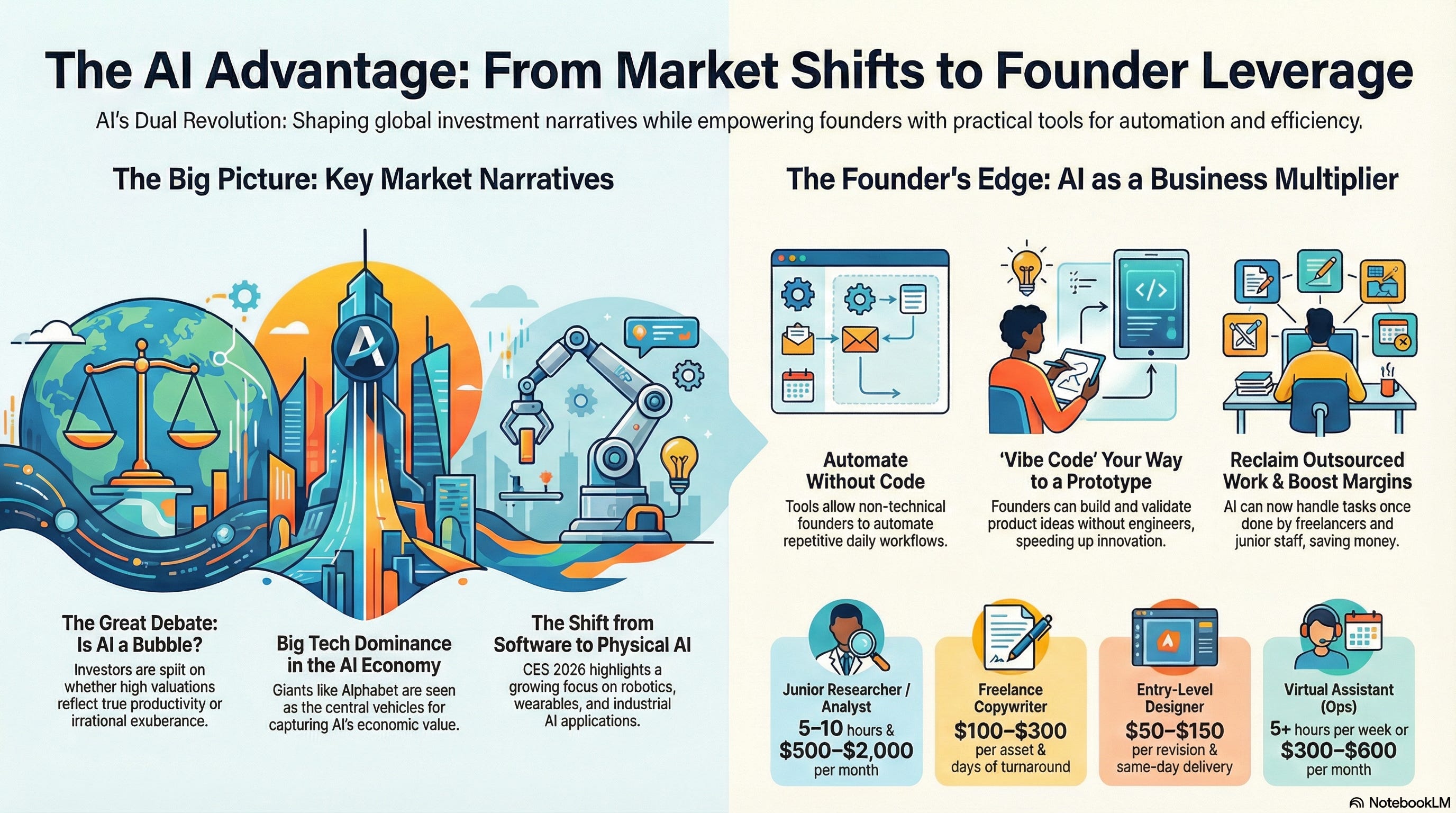
AI Bubble Fears Are Reaccelerating
What authoritative voices are saying. Some leading investors now warn that the AI-led rally may be in the early stages of a bubble, with heavy concentration in a few mega-cap tech names and sentiment perhaps outrunning fundamentals. (Reuters)
What critics are arguing. Others counter that current valuations reflect real productivity gains and sustainable earnings linked to AI adoption, not irrational exuberance. (FourWeekMBA)
Signal: Investors should revisit valuation discipline and diversification if growth expectations are already priced in.
Inflation Framed Through an AI Lens
What authoritative voices are saying. Market strategists highlight the “AI-driven inflation” narrative as a potentially underappreciated macro risk that could influence central bank rate policy. (Reuters)
What critics are arguing. Skeptics note that AI itself isn’t directly inflationary—cost pressures are more tied to energy, labor, and supply constraints. (FourWeekMBA)
Signal: If tech investment heats up costs broadly, this could shift monetary outlook and risk assets.
Big Tech Dominance as the Core AI Trade
What authoritative voices are saying. Analysts are bullish on giants like Alphabet as the central vehicles for capturing AI economic value, extending across infrastructure to applications. (MarketWatch)
What critics are arguing. There’s concern that such concentration limits broader market participation and masks underlying dispersion risk. (FourWeekMBA)
Signal: Beta concentrated in majors may persist, but alpha opportunities may need deeper thematic filters.
AI at CES: Enterprise/Industrial Momentum
What authoritative voices are saying. With CES 2026 spotlighting robotics, wearables, industrial AI, and next-gen chips, the narrative is shifting from pure software to physical AI integration. (Investors)
What critics are arguing. Some caution that hype around prototypes won’t translate quickly to revenue gains. (FourWeekMBA)
Signal: Capital allocation may tilt toward AI hardware and edge computing plays, not just software.
Regulatory and Risk Narratives in AI Platforms
What authoritative voices are saying. Scrutiny of AI trading platforms and transparency is rising, emphasizing risk and trust issues in automated investing. (livebitcoinnews.com)
What critics are arguing. Proponents of AI platforms argue that regulations could standardize safety without damping innovation. (sofi.com)
Signal: Regulatory risk is becoming a priced-in factor for AI finance startups and trading tech.
Another great collection! I wonder if all the prompts from this series should be published together as an ebook or JSON file…🤔
The 'Compression' thesis is brilliant, Juan.
The idea that decision cycles and cost structures are collapsing is exactly right—leverage has never been cheaper.
But I'd offer a counterpoint to the 'Vibe Coding' advice. I believe we are entering a danger zone of 'Black Box Liability.'
If the unit of competition is pure 'Judgment,' that judgment must be based on a deep understanding of the underlying system.
If a CEO 'vibe codes' a product they can't read or fix, they aren't a decision-maker; they are a passenger.
The winners won't just be those with good taste/judgment, but those who can 'Code Review' the AI's output.
The constraint isn't just knowing what to build, but knowing enough to verify that the AI actually built it correctly.