


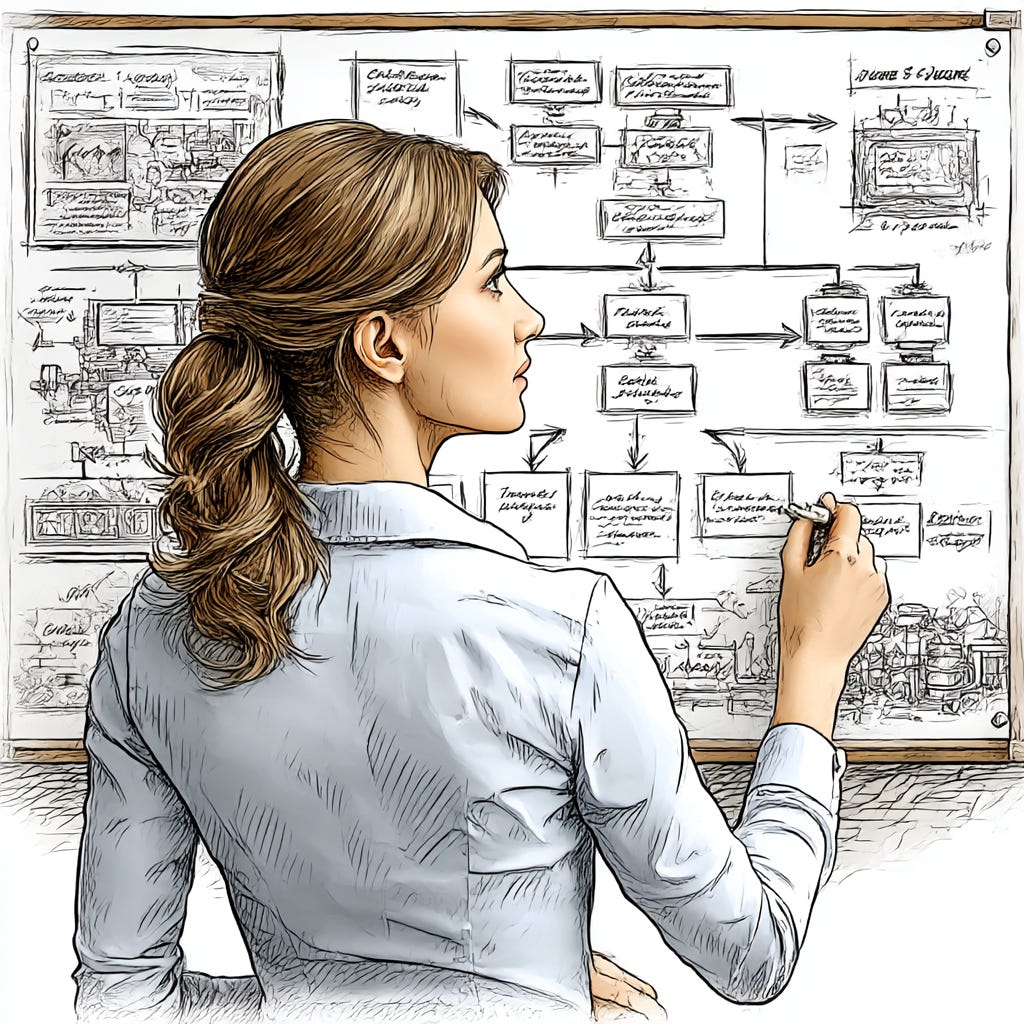
A monthly synthesis of the recurring problems founders, product managers, and operators faced in January 2026. It reflects patterns observed across many independent public conversations over time, not isolated anecdotes or expert opinion. We only include problems that multiple people describe without clear resolution, and we avoid proposing fixes or drawing conclusions beyond what is visible in those discussions.
Some reader’s favorites
AI Agents Are Now Hiring Humans: The Rise of RentAHuman and the Agent Economy
AI Agents Just Built Their Own Social Network. Humans Are Not Allowed to Post.
Build to Thrive | The AI Blueprint | Week of February 2nd, 2026
How I Scaled My Business Without Hiring: Building My First AI Agents for $0
4 Ways NotebookLM Will Supercharge Your Research
Everyone’s Rushing to AI. Few See the Ceiling Ahead.
—🔴—🔴—🔴
Starting this month, The Weekly Pain Point moves to a monthly cadence. We realize weekly views capture motion, but a monthly view reveals what actually sticks.
In a moment where solopreneurs and product builders can now ship with AI faster than ever, the harder problem is no longer building solutions, but knowing which problems are actually worth solving.
Each edition reflects patterns observed across many independent public conversations over time. We only include problems that multiple people describe repeatedly, without clear resolution.
If you are building with AI and want a clearer map of persistent problems, this edition is for you.
—🔴—🔴—🔴
The Month in One Sentence
January was the month it became clear that coordination, not execution, is now the dominant source of friction, even with AI in the workflow.
The Problems That Wouldn’t Go Away
Across founders, product managers, and operators, the same frustrations resurfaced repeatedly:
“AI is supposed to save time, but I’m double-checking everything.”
“I have too many tools and still can’t see what actually matters today.”
“We keep changing direction mid-stream and calling it alignment.”
“I’m responsible for outcomes, but I don’t control the inputs.”
“I spend hours manually updating reports no one really trusts.”
“My backlog is full, but I still don’t know what deserves attention this week.”
These appeared independently, across roles and contexts, and remained unresolved.
What These Problems Have in Common
Despite sounding different, all of these pains stem from the same structural failure.
Intent, state, and authority do not persist as work moves.
Decisions are made, but do not bind execution.
Priorities exist but are not enforceable.
Ownership is assigned but detached from control.
State is visible, but not dependable.
As a result, humans are forced to compensate by supervising, reconciling, re-explaining, and re-deciding.
Why is this happening?
In January, coordination demands quietly crossed a threshold.
AI usage increased. Tool stacks expanded. Work accelerated.
But informal systems, memory, meetings, intuition, and ad-hoc notes, did not scale with them.
Instead of reducing effort, leverage exposed fragility.
The faster work moved, the more obvious it became that clarity was not durable.
The Direction This Points Toward
These pains point toward the need for systems that make shared reality durable:
Decisions that remain binding after they are made
Priorities that do not rely on tone or interruption
Ownership that includes authority and visibility
State that carries forward without manual translation
This is a coordination architecture problem, not a productivity one.
What This Changes for Builders and PMs
The central question is no longer:
“How do we move faster?”
It is now:
What must remain true as work moves across people, tools, and automation?
Without that shift, AI increases supervision, tools increase noise, and progress becomes harder to trust, not easier.
What to Watch Next
If this failure remains unresolved, expect pressure to intensify around:
Trust and supervision of AI-generated work
Priority confusion as tool stacks continue to grow
Decision churn as execution outpaces alignment
Burnout driven by humans acting as coordination glue
These are early signals.
When coordination scales faster than structure, effort turns into exhaustion, even when the work itself is getting easier.
JS
—🔴—🔴—🔴
This edition is a new initiative. Feedback is appreciated. Thank you.
Help us improve it
Disclosure
This article reflects aggregated public pain patterns observed over time, not validated market demand.
Descriptions of what a solution would need to enable define capability requirements, not proposed products or strategies.
Forum-led signals may skew toward early adopters or dissatisfied users.