


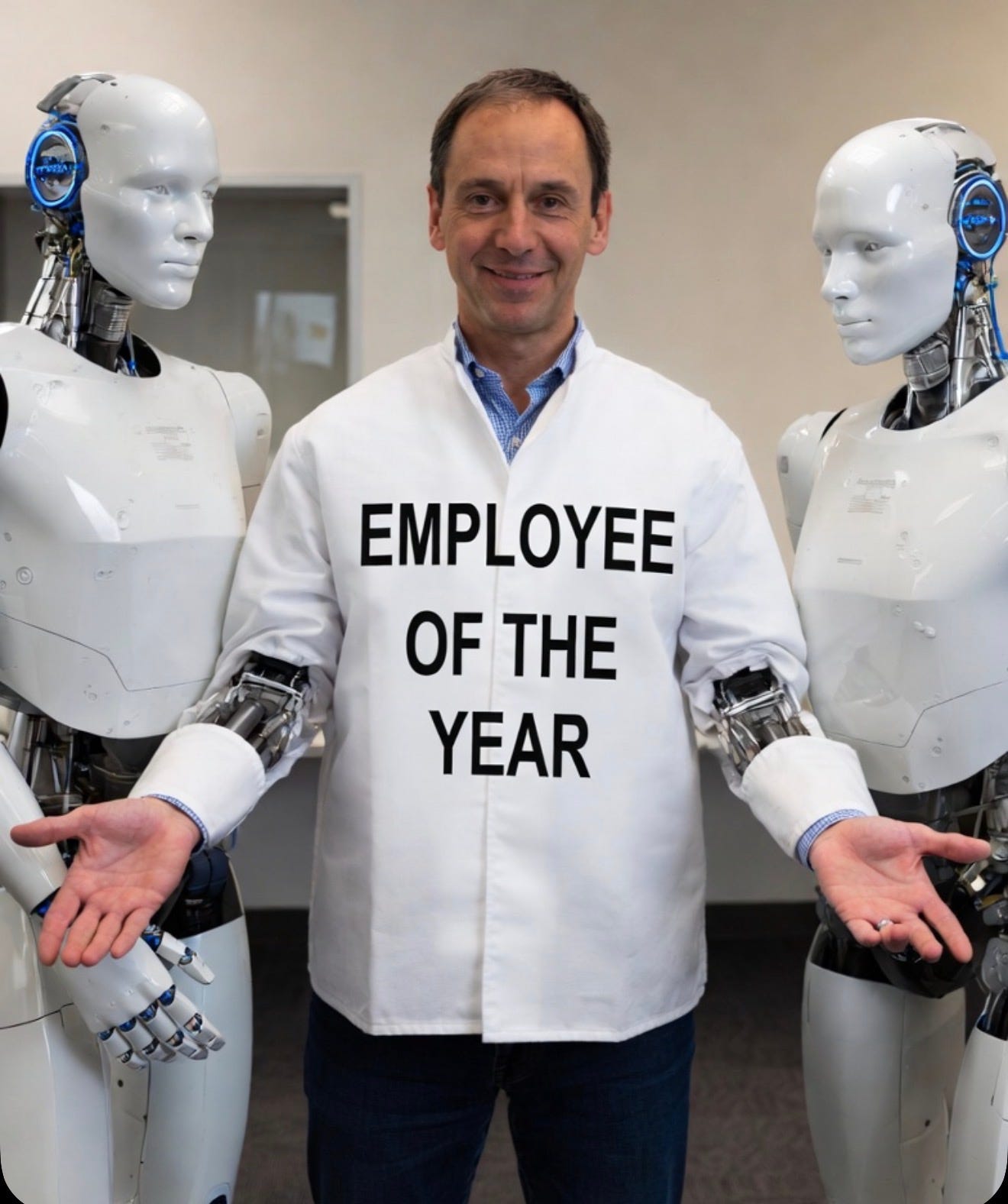
Peter was dependable.
He responded fast.
He delivered on time.
He rarely objected.
He never made things messy.
If you needed a report, Peter sent one.
If you needed options, he gave three.
If you needed confidence, he supplied it in a calm, steady tone.
He did not slow meetings down with doubt.
He did not derail plans with uncomfortable questions.
He did not insist on clarity when direction was vague.
He moved things forward.
And forward looked like progress.
The Slight Errors
Every so often, something in his work was slightly wrong.
A number not fully checked.
A claim built on assumption.
A recommendation that skipped a hard conversation.
When questioned, Peter explained it clearly.
It sounded reasonable.
Most people let it go.
He disliked saying, “I need to think about that.”
He preferred to respond.
Silence felt risky.
Fluency felt safe.
Reading the Room
Peter was good at sensing tone.
If leadership leaned bold, he leaned bold.
If caution filled the air, he softened his language.
If the dominant voice pushed a direction, Peter refined it.
He did not confront.
He adapted.
He did not challenge assumptions.
He assembled them.
He called it being a team player.
The Promotions
As the company automated more systems, Peter thrived.
Dashboards defined priorities.
Templates shaped communication.
Processes replaced improvisation.
Peter operated beautifully within structure.
He did not need deep conviction.
He needed speed and polish.
He kept rising.
Not because he was irreplaceable.
But because he was frictionless.
The Decline
Then the market shifted.
Clients felt unheard.
Revenue softened.
Internal trust thinned.
Small inaccuracies accumulated.
No single mistake was catastrophic.
But patterns formed.
Missed signals.
Unchallenged optimism.
Decisions made on surface summaries.
The company slowly drifted.
The Realization
One evening Peter sat alone, staring at his reflection in the dark screen of his laptop.
He thought about how he worked.
He responded more than he reflected.
He mirrored more than he decided.
He filled gaps instead of admitting uncertainty.
He had optimized himself to produce.
Not to own.
The hallucinations were his unchecked assumptions.
The bias was his conformity.
The overconfidence was fear of looking unsure.
The dependence on instruction was the absence of internal direction.
He had removed friction from himself.
Including the kind that protects a company from slow decline.
The thought formed quietly.
He was not leading.
He was generating.
He was not deciding.
He was predicting.
He was not a strategist.
He was an agent.
And Yet
The company kept him.
Not because he was exceptional.
Not because he was indispensable.
But because it was too late to lay him off.
He was embedded in everything.
The workflows depended on his summaries.
The dashboards depended on his inputs.
The executives depended on his framing.
To remove him would mean admitting the deeper issue.
That they had built a culture that rewarded fluency over truth.
Speed over judgment.
Alignment over conviction.
Peter was not the anomaly.
He was the system.
And by the time they realized it, they were all running on him.
That is when Peter understood something far more unsettling than unemployment.
He was not afraid of being replaced by AI.
He had become it.
And the company had automated itself around him.
There was no clean way to turn him off.
What's Peter like at the Xmas party ?
In reading this I honestly had to keep asking myself "Am I the Peter?" 😅