


Editorial Note
Clarity before scale
Something important is shifting in how businesses operate with AI and automation. The advantage is no longer speed or access. It is how well your systems hold up when decisions are made under pressure, uncertainty, and scrutiny. As automation becomes easier to deploy and AI moves deeper into core workflows, the cost of weak assumptions and vague responsibility rises quickly.
This shift matters because expectations are hardening. Customers expect consistency and trust. Markets expect discipline and defensible choices. Teams expect systems that reduce noise instead of adding complexity. When leverage compounds, small design flaws do too. What once felt like edge cases now show up as operational risk, reputational damage, or strategic drag.
The real advantage right now is clarity. Knowing where to slow down, where to automate, and where to question your own confidence before scale forces the issue. The ideas here are meant to help you see pressure points earlier, make calmer decisions, and design systems that behave well when conditions are not ideal.
Build with intent.
Let clarity do the heavy lifting. JS
Table of Contents
Clarity Prompts
Pressure-testing trust, responsibility, and failure before scale
• The Trust Protocol Shift
• The Responsible Shield
• The Founder’s Pre-Mortem
Featured Article
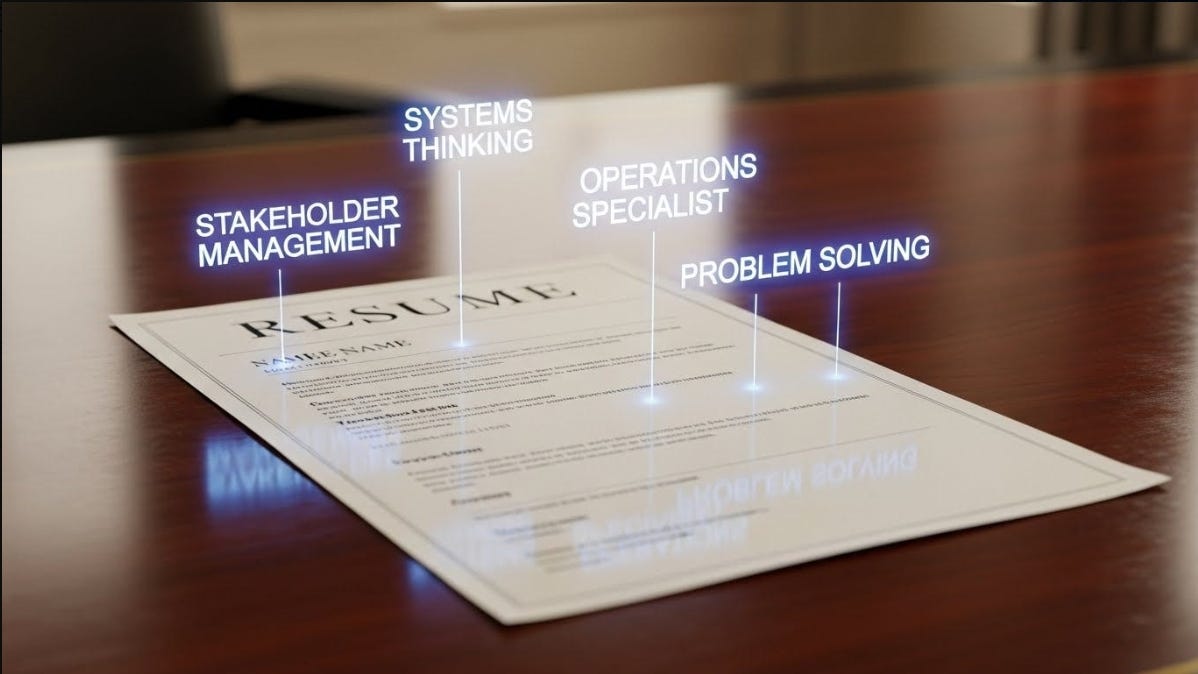
The Hidden Skills Already in Your Workflow
And How to Transfer Them to AI
AI Automation Leverage
Practical automations that increase output without adding headcount
Strategic Terrain
How AI is reshaping operating models and competitive advantage
AI Capital Market Narratives
The stories shaping risk, margins, and valuation
Clarity Prompts
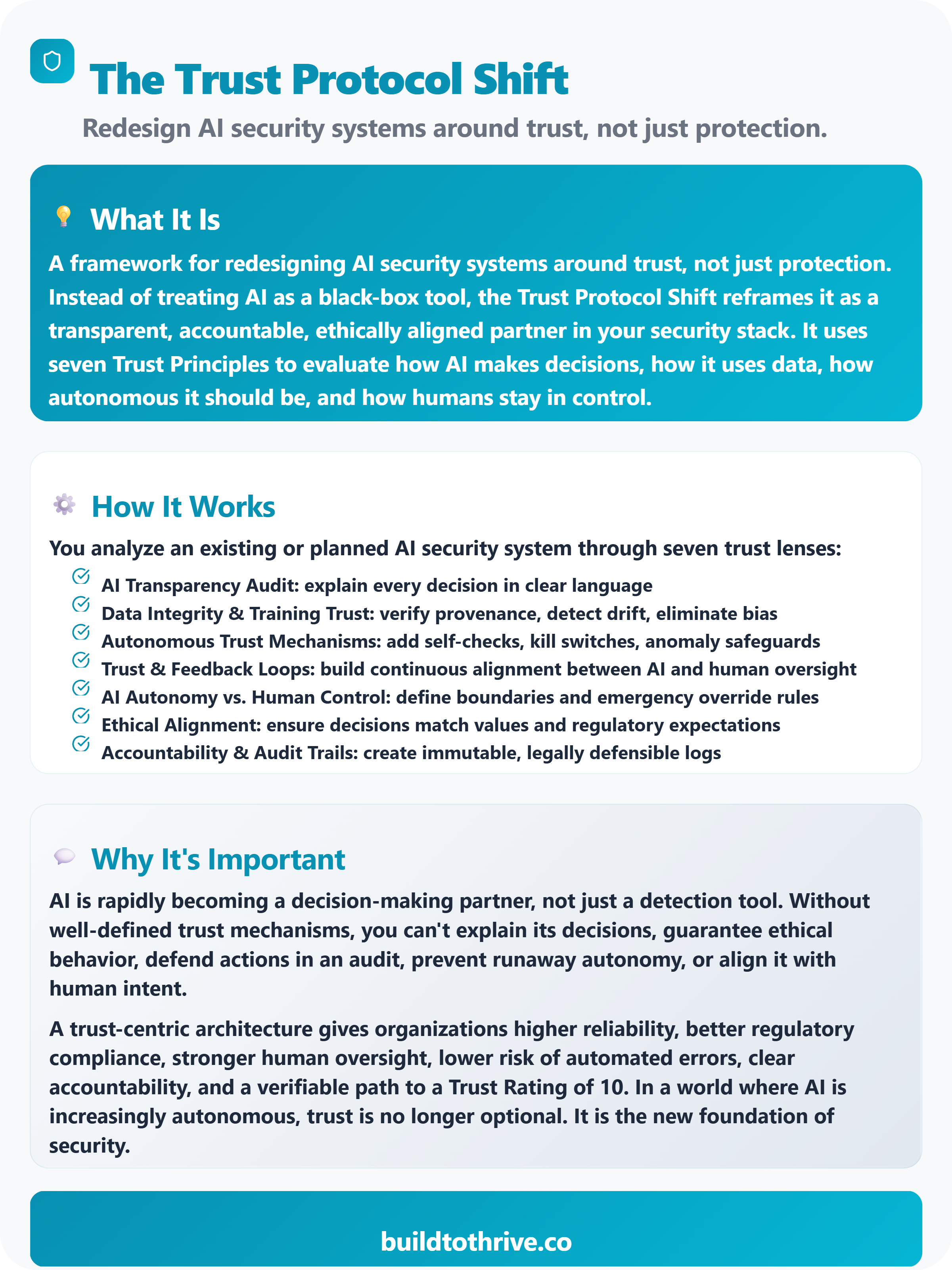
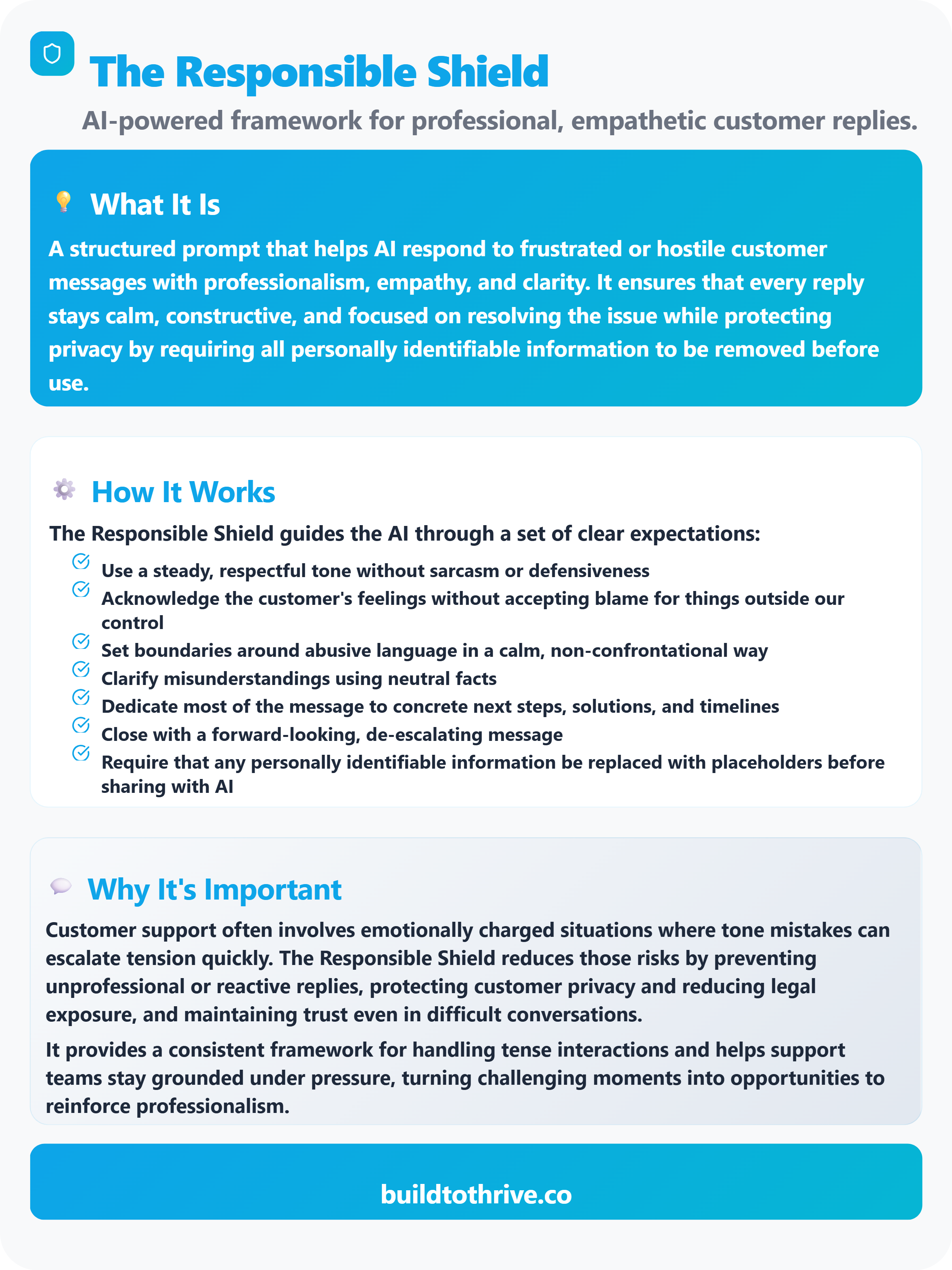
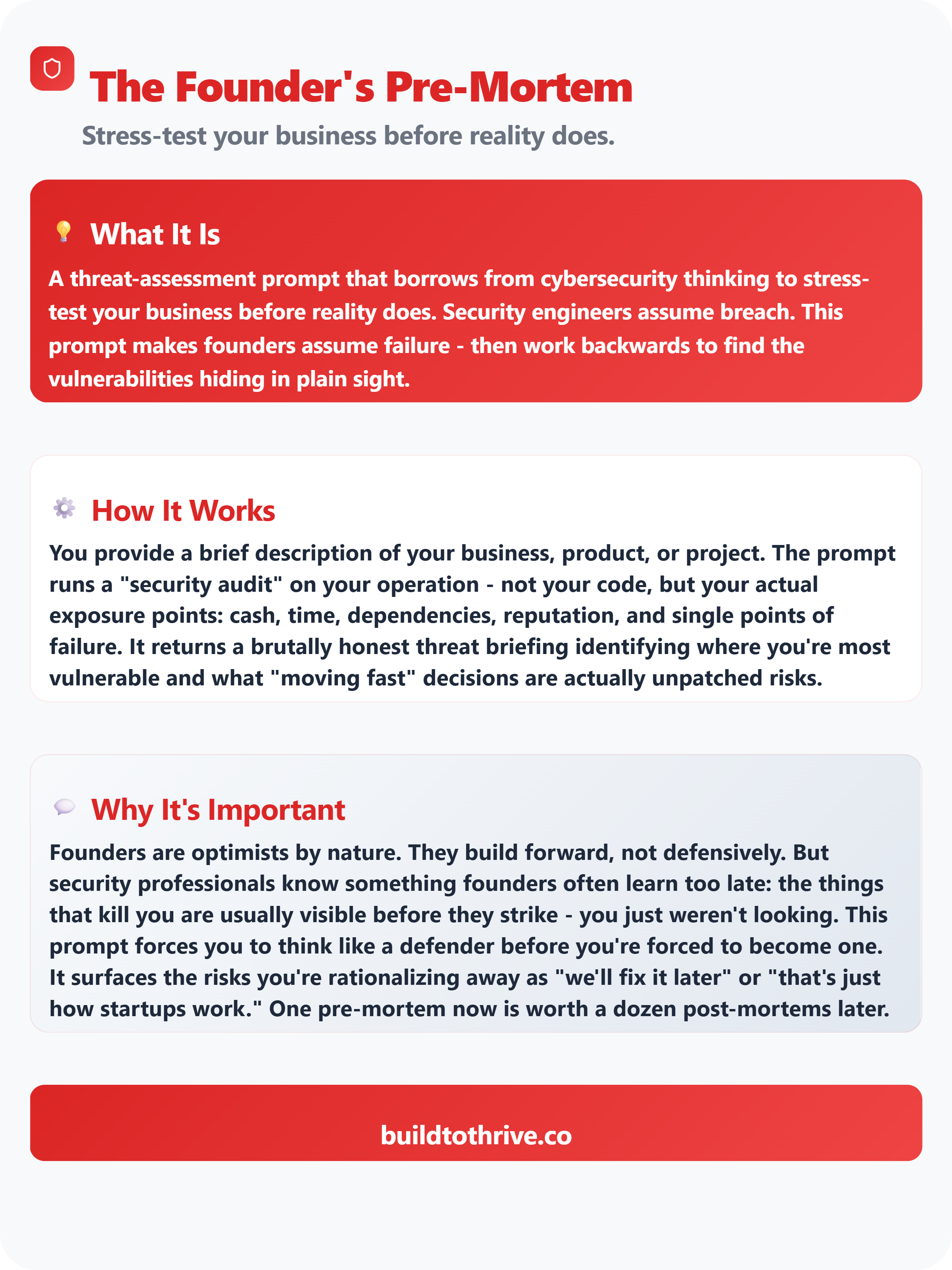
This week’s Clarity Prompts help you pressure-test trust, risk, and response quality across your business. These three prompts sharpen how you handle tense customer interactions, evaluate AI systems beyond surface-level security, and uncover hidden vulnerabilities before they become real failures. Together, they’re designed to surface blind spots, reinforce ethical and operational discipline, and help you make calmer, more defensible decisions under pressure, before stakes, scale, or speed amplify the cost of mistakes.
THE TRUST PROTOCOL SHIFT
Lights On by Farida is an independent, systems-first newsletter for readers who want to understand what’s really driving technology, business, and cybersecurity, not just react to the headlines. It’s built for people who care about the why, the how, and the second-order effects most commentary ignores.
If you want clear, unsensational analysis that blends data engineering, neuroscience, cybersecurity, and deep systems thinking, Lights On delivers the signal beneath the noise.
THE RESPONSIBLE SHIELD
By Cristina
The Responsible AI Brief is a clarity-driven newsletter for builders, leaders, and decision-makers who want to understand AI beyond the hype and use it responsibly at scale. It’s written for people who recognize that ethical AI doesn’t start with individual users, it starts upstream, with the organizations designing, deploying, and governing these systems.
A must-read for anyone serious about building AI systems that are transparent, inclusive, and worthy of public trust.
Running your business blind? The Business Health Diagnostic shows exactly where you are strong, where you are exposed, and which moves create the fastest growth, so you scale with clarity instead of guessing.
THE FOUNDER’S PRE-MORTEM
By Christopher Ljams
ToxSec is a hands-on security research newsletter for engineers, pentesters, and builders who want to understand how AI and modern systems actually break. It’s written for practitioners who care less about theory and more about real vulnerabilities, real tooling, and real-world impact.
If you want practical walkthroughs, web pentesting deep dives, and clear explanations of how bugs work and how to report them in ways that get rewarded. ToxSec delivers field-tested insight grounded in government and private-sector security experience.
Featured Article
The Hidden Skills Already in Your Workflow (And How to Transfer Them to AI) - Google Docs
AI Automation Leverage - Be lean and faster
A weekly snapshot of practical AI automations founders can deploy immediately to increase output without adding headcount.
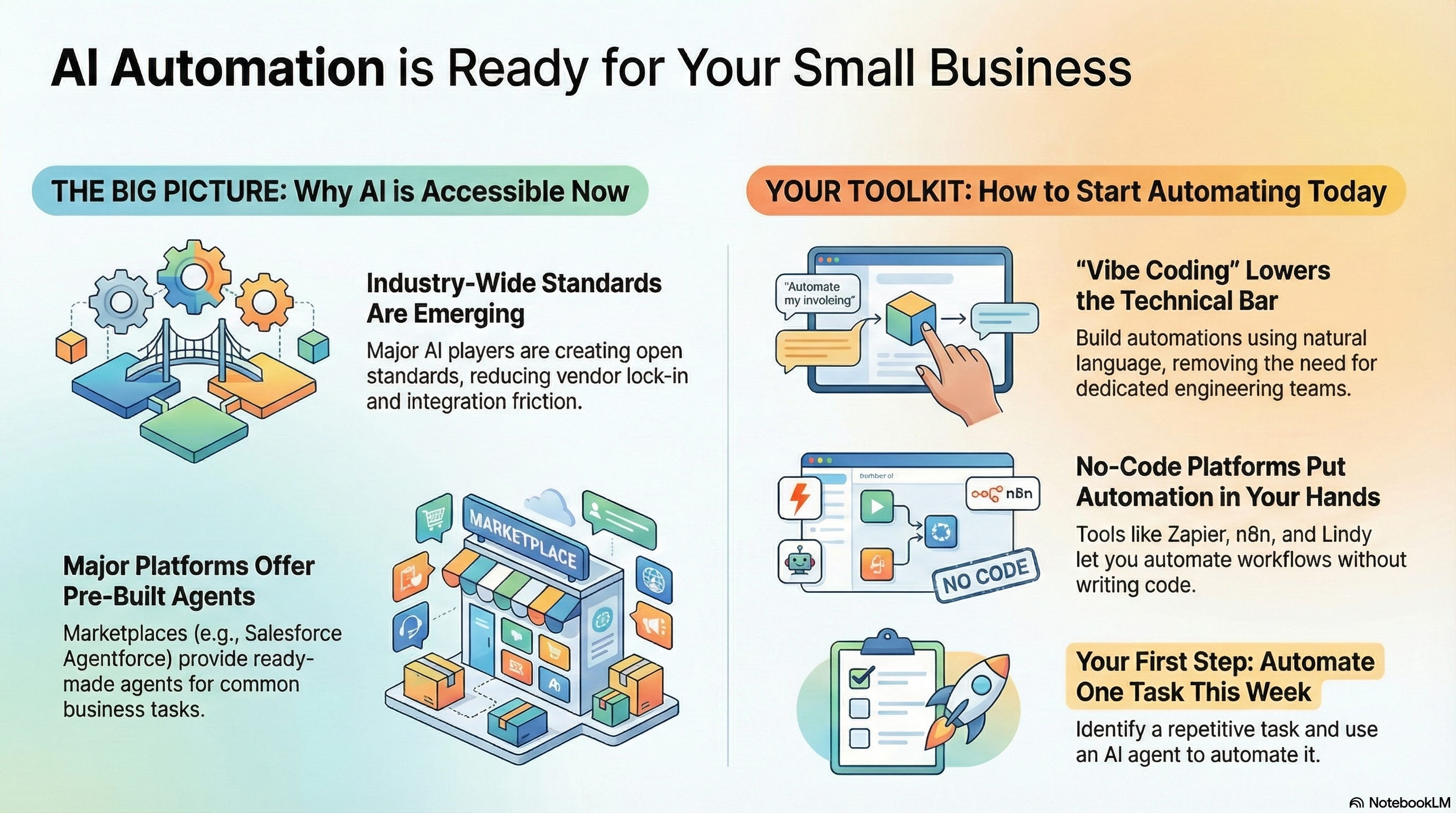
This week confirms that AI agents and automation are maturing into genuinely accessible tools for small teams, not just enterprise R&D headlines. Founders now have both practical automations worth deploying this week and macro signals showing where the industry is standardizing and accelerating. The key is to focus on agent-enabled workflows that replace repetitive work and unlock hours of leverage without technical debt.
Trend 1: AI Agents Are Being Supported by Industry-Wide Standards
OpenAI, Anthropic, and Block Team Up for Open AI Agent Standards
Major AI players launched the Agentic AI Foundation to create open standards that make AI agents easier to build, integrate, and scale across platforms. This reduces lock-in and friction for automation tools over time. WIRED
Practical Takeaway
Choose agent tools that adhere to emerging standards (e.g., open protocols) so you can switch providers without rebuilding your automations.
Trend 2: AI Automation Platform Expansion Signals Cross-Industry Utility
Salesforce Expands Agentforce 360 to Build and Sell AI Agents
Salesforce’s new partner-centric push means more packaged, pre-built AI agents that businesses can deploy for tasks such as customer engagement and workflow automation without engineering teams. IT Pro
Practical Takeaway
Explore Agentforce or similar marketplaces for ready-made automation agents you can repurpose for your workflows this week.
Trend 3: AI Automation Startups Are Scaling Beyond Core IT Use Cases
Serval Hits $1B Valuation With Natural-Language Automation Tools
An AI automation startup that lets admins build automations via natural language — sometimes called vibe coding — just achieved unicorn valuation and rapid revenue growth. Reuters
Practical Takeaway
Experiment with natural-language automation builders (even at basic tiers) for internal support tasks, ticket handling, and onboarding flows.
Trend 4: No-Code Automation Tools for SMBs Keep Getting More Practical
Top Tools Lists Highlight AI Workflow & Agent Builders
Recent industry guides list no-code/low-code platforms (like n8n, Lindy, Make.com, Zapier Agents) that let you automate repetitive operations without engineering resources. Lindy+1
Practical Takeaway
Pick one of these no-code automation platforms and onboard a teammate to build a workflow this week (e.g., CRM updates or email summaries).
Trend 5: External Investment in AI Tools Validates Automation Use Cases
Emergent AI Startup Gets Strategic Investment From Google
A “vibe coding” startup focused on natural-language task automation secured funding and scale support — a sign that investors see low-code AI as a real productivity driver. The Economic Times
Practical Takeaway
If you’ve been delaying automation because your team lacks technical skills, start with natural-language-driven tools that reduce the learning curve.
Why It Matters for Small Businesses
This week’s developments show that AI automation isn’t just advancing, it’s coalescing around usable standards and platforms that small teams can adopt today. When the industry aligns on open agent frameworks and major players expand agent marketplaces, accessibility improves and vendor lock-in drops. That matters because small teams win when they build repeatable, scalable workflows that replace manual labor. Automating just one repetitive task now compounds over time into hours freed, higher throughput, and faster strategic iteration.
Founder Reflection
What is one repetitive task you currently do that could be automated with an AI agent or workflow tool this week, even if imperfect at first?
Strategic Terrain - Decide Smarter
A weekly map of how AI shifts the ground beneath how companies build and compete.
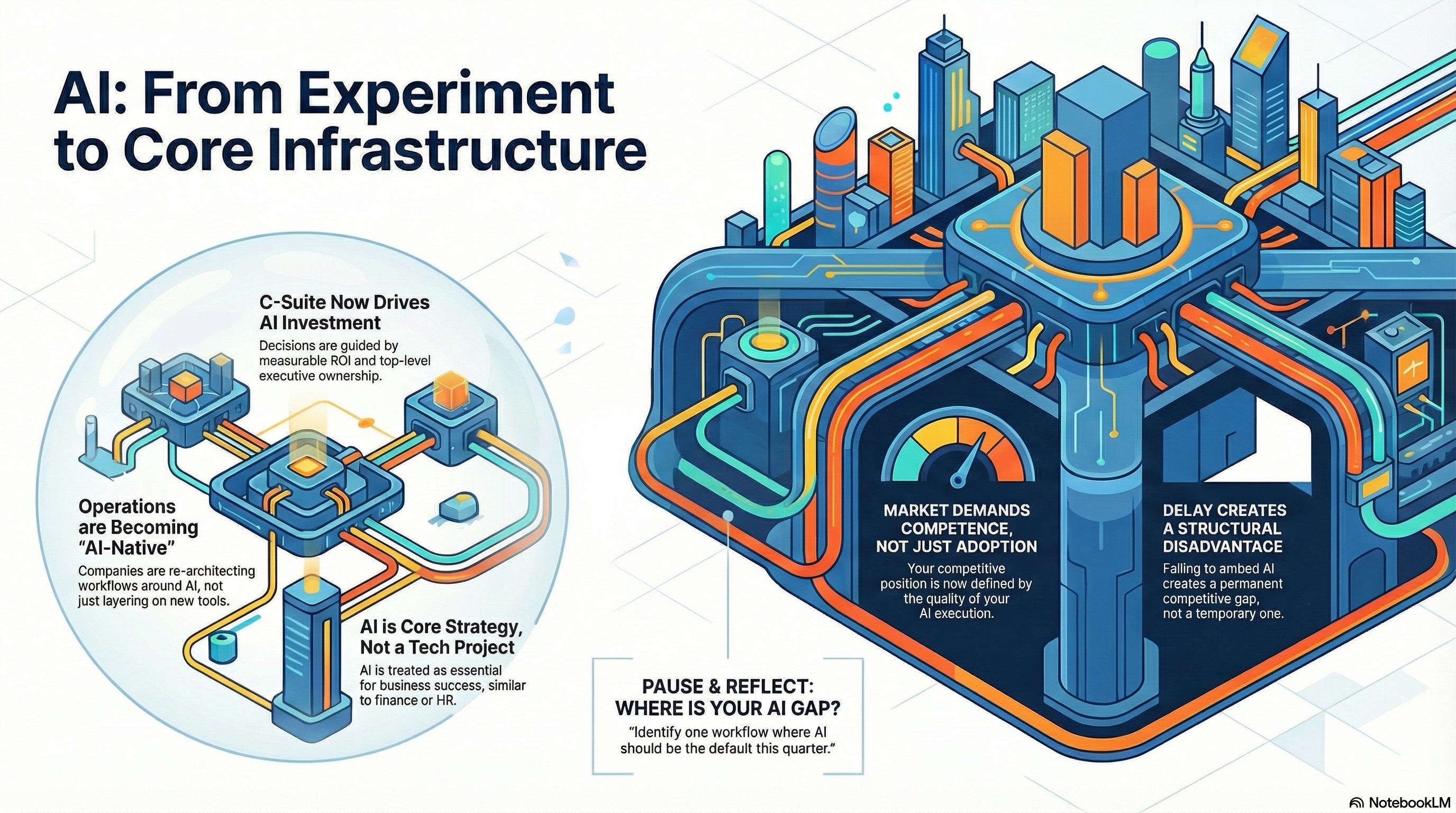
This week’s market moves confirm a clear shift: AI is now core business infrastructure, not an experimental layer. Platforms, investors, and enterprise buyers are aligning around reliability, scale, and automation-first operating models. The direction is stable. The cost of delay is rising.
Strategic Signals
AI investments now driven by C-suite ownership and ROI accountability
Operating models shifting toward AI-native workflows and governance
Infrastructure commitments moving to scale-ready, long-term architectures
AI treated as core business strategy, not a tech initiative
Adoption frameworks emphasize standardization and control over pilots
Why It Matters
The market is no longer rewarding AI adoption. It is pricing in AI competence. Infrastructure choices, workflow design, and execution quality now determine competitive position.
How It Affects Small Teams
AI-enhanced execution is becoming the baseline. Small teams that embed AI into core workflows gain speed and cost leverage. Teams that delay risk structural disadvantage, not temporary inefficiency.
Top 5 Articles of the Week
Enterprise AI success depends on re-architecting operating models, not layering tools Thinkia | AI-Native Consulting
AI infrastructure strategies are shifting to hybrid, scale-ready architectures Deloitte
AI strategy is now treated as core business strategy, not an optional experiment Gartner
AI adoption frameworks emphasize structured transformation, standardization, and control arXiv
Pause and Reflect
Which assumption in your operating model is now weakest: speed, cost structure, customer expectations, or differentiation? Identify one workflow where AI should be the default this quarter.
AI Capital Market Narratives - Move Early
A concise snapshot of the AI narratives currently shaping how markets, media, and institutional investors are reframing risk, margins, and valuation
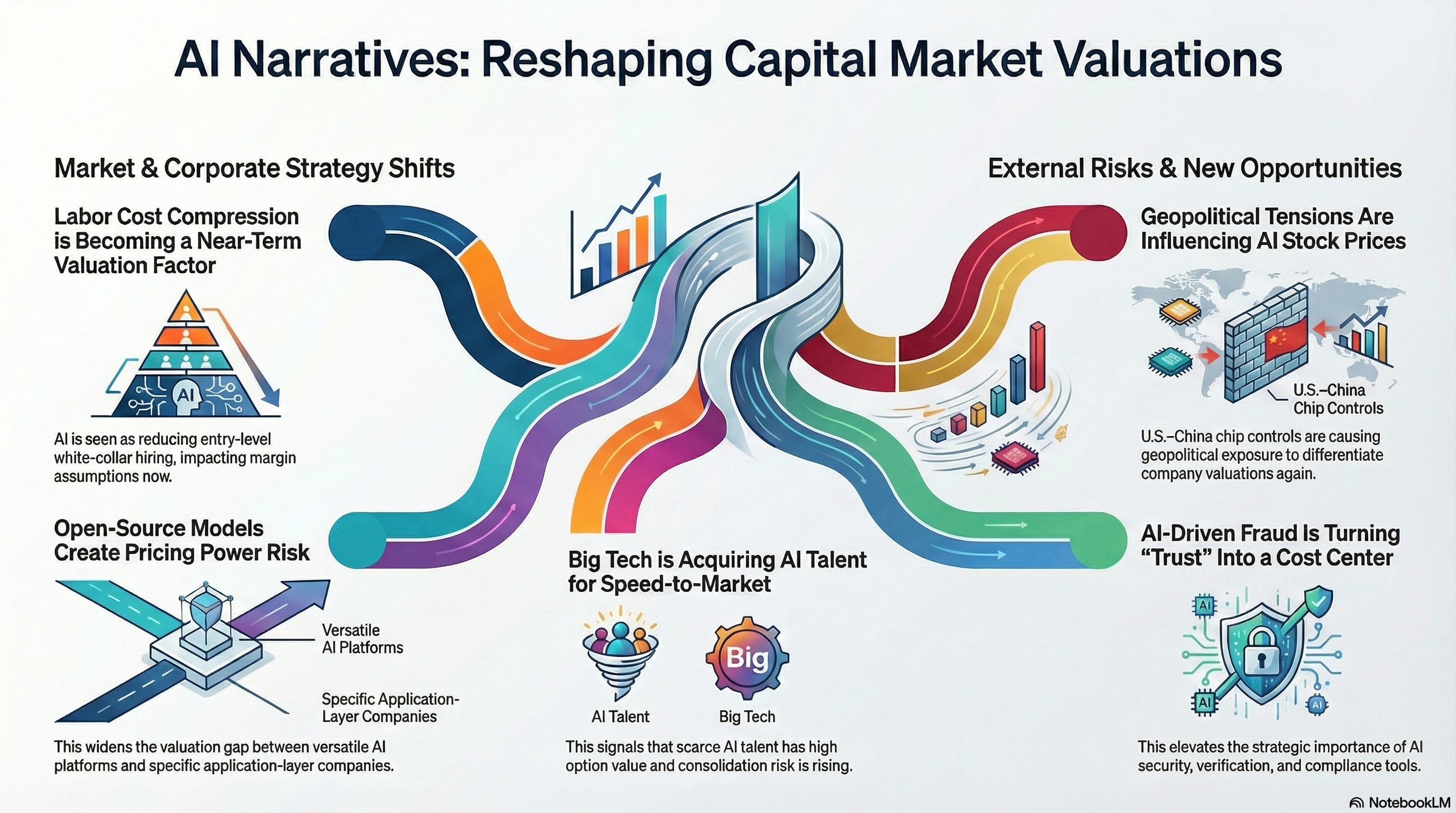
AI Is Quietly Breaking the White-Collar Labor Pyramid (Entry-Level Jobs as the First Margin Lever)
What authoritative voices are saying: Bloomberg, CNBC, and sell-side commentary increasingly frame AI as already reducing entry-level white-collar hiring in tech, media, and professional services, shifting near-term margin assumptions. What critics are arguing: Labor economists and policymakers argue evidence remains anecdotal and that productivity gains will offset displacement. Signal: Labor cost compression is moving from long-term thesis to near-term valuation input.
Open AI Is Forcing a Pricing Reckoning Across Software Markets
What authoritative voices are saying: Influential voices on X, echoed by FT and Bloomberg, argue open models are driving cost deflation and commoditization pressure across AI software. What critics are arguing: Closed-model advocates say proprietary data, reliability, and compliance justify sustained pricing power. Signal: Pricing power risk is widening spreads between platforms and application-layer AI.
Big Tech Is Buying AI Speed Instead of Building It In-House
What authoritative voices are saying: Reuters, CNBC, and Yahoo Finance highlight a rise in small AI acquisitions and talent-focused deals as Big Tech prioritizes speed. What critics are arguing: Skeptics warn these deals inflate goodwill and obscure weak internal innovation. Signal: Scarce AI talent is gaining option value; consolidation risk is rising.
Geopolitics Is Creeping Back Into AI Valuations via Export Controls
What authoritative voices are saying: Bloomberg and WSJ report renewed focus on U.S.–China chip controls and their impact on AI revenue assumptions. What critics are arguing: Some analysts argue China exposure is already priced in. Signal: Geopolitical exposure is again differentiating AI equity multiples.
AI Is Turning Trust Into a Cost Center Through Fraud and Deepfakes
What authoritative voices are saying: Regulators, banks, and CNBC warn AI-enabled fraud is accelerating, raising compliance and trust costs. What critics are arguing: Others argue detection tools will scale just as quickly. Signal: AI security, verification, and compliance tools are gaining strategic importance
Until the next edition, Juan

Build to Thrive helps founders and small teams make better decisions before they execute. Right now, a lot of leaders rush into tools, hiring, or automation because of AI pressure and end up wasting time and money. Through my Blueprint newsletter, I filter the noise and help people decide what to act on next, what to delay, and where to focus resources so they don’t make expensive false starts.
My work focuses on helping entrepreneurs bring order to growth and clarity to complexity, moving from chaos to control, and from control to sustainable growth.
If you are struggling with growing your company, here are some ways I can help:
Setup a FREE 20 minute call with me directly to talk about possibilities Click Here
Click Here for information about my coaching program and my 90 Day sprint program.
Special Holiday Offer. Subscribe to my private coaching membership now and receive a 50% discount on 2-hours of coaching or as part of my 90 Day sprint program. Click here for more information.
Have a wonderful rest of the week. Juan
Here are some popular articles
AI Is Here. Let’s Get Your Business in the Game.
How I Scaled My Business Without Hiring: Building My First AI Agents for $0
The Science of Execution: Why Most Founders Stay Stuck (and How to Break Through in 90 Days)
How to Build Assets That Compound (Even When Life Forces You to Pivot)
Everyone’s Rushing to AI. Few See the Ceiling Ahead.
Scaling Smart: 5 Systems Every Solopreneur Needs to Grow Without Burning Out
Built to Blaze: How Ooni Turned Backyard Pizza into a $200M Global Movement
Great post, insightful! Thank you for including my voice alongside so many thoughtful perspectives. I appreciate the care taken in curating these prompts and reflections, the conversation is much richer when multiple point of views are allowed to coexist.
Too cool! Great to read the other prompts :).
Really appreciate how these are put together. I think it’s not only educational, but a great way to get the community to get to know each other better.